
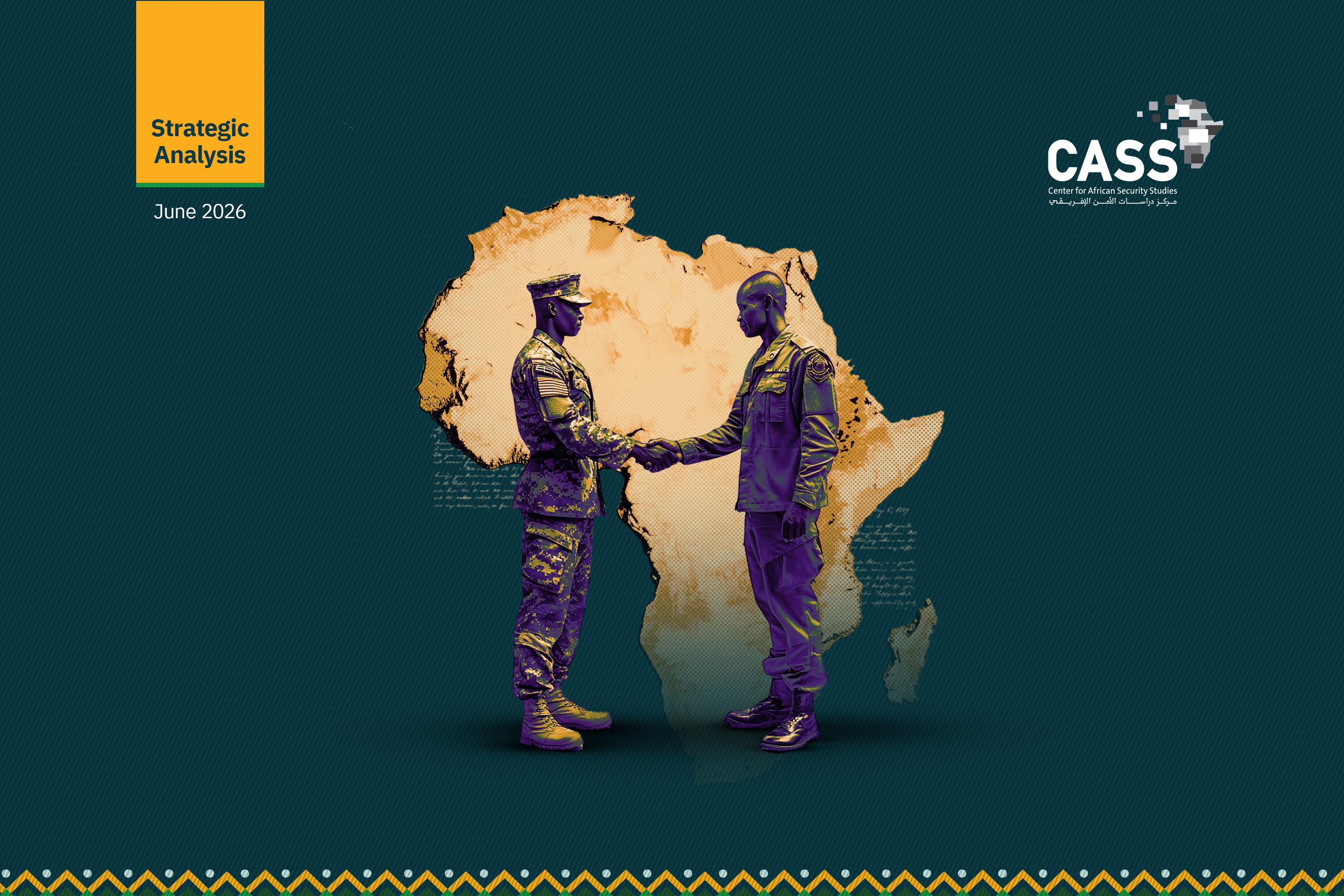
The African continent has witnessed, in recent years, a marked escalation in interest in developing military infrastructure and strengthening multinational training exercises, against the backdrop of a security environment characterised by growing cross-border threats, the widening activities of armed groups and extremist organisations, and intensifying international geopolitical competition for influence within the continent.
This trend has shifted from a form of limited military cooperation into a broader strategic trajectory aimed at raising the readiness of African armies, enhancing operational coordination, and developing technical and intelligence capabilities.
This transformation is linked to several key factors, foremost among them the deteriorating security situation in the Sahel, West Africa, the Horn of Africa, and the Great Lakes region. The challenges facing African states are no longer confined within their national borders; they have acquired a regional and cross-border character — whether involving jihadist groups, smuggling networks, irregular migration, maritime piracy, or protracted armed conflicts.
This reality has prompted many African governments to recognise that unilateral responses are no longer sufficient, and that strengthening joint military action has become a security and political necessity.
In this context, multinational military exercises have expanded markedly in scale, scope, and specialisation. Among the most prominent of these manoeuvres are the African Lion exercises — considered among the largest military training events on the continent, involving African and international forces — as well as the Flintlock counterterrorism exercises, which focus on raising the efficiency of special forces and enhancing inter-army coordination in confronting armed organisations in the Sahel and Sahara.
Joint maritime training exercises have also emerged in the Gulf of Guinea, the Red Sea, and the Indian Ocean to address piracy threats and protect vital maritime corridors.
The focus is no longer confined to conventional combat training; it has extended into more advanced domains linked to the nature of modern warfare. The importance of training in drone operations, electronic warfare, cybersecurity, and multinational command and control has grown, alongside improvements in intelligence-gathering and analysis capabilities. This shift reflects a growing awareness among African armies that current threats require more sophisticated and flexible tools compared to traditional patterns of warfare.
The escalating interest in military infrastructure has also been linked to efforts to modernise African armies and develop their logistical and technical capacities. A number of countries have moved to strengthen their capabilities in military transport, surveillance systems, border monitoring, and air defence, while reliance on low-cost technologies such as drones and digital reconnaissance systems has grown.
In some cases, governments have sought to develop limited domestic defence industries in order to reduce full dependence on external suppliers.
The regional dimension occupies a particularly important place in this transformation. Joint security initiatives have emerged, such as the Multinational Joint Task Force combating Boko Haram in the Lake Chad Basin, alongside military cooperation arrangements among Sahel states and attempts to establish new security frameworks following the declining effectiveness of some traditional structures, such as the G5 Sahel.
Regional organisations such as the African Union and ECOWAS are also working to reinforce the concept of "collective security" as a foundation for regional stability.
Conversely, the growing interest in military infrastructure cannot be separated from the escalating international competition within Africa. The United States, France, Turkey, China, Russia, and other states are all seeking to expand their military and security presence through training programmes, arms transfers, and defence partnerships.
These powers use joint manoeuvres and capacity-building programmes as tools to advance political and strategic influence, particularly in regions of geopolitical importance such as the Sahel, the Horn of Africa, and the Red Sea.
Yet this military expansion also raises a number of challenges. Some African states face financial and structural difficulties that limit their ability to sustain long-term military modernisation programmes.
The growing reliance on external support may also create new forms of security dependency, particularly in the domains of arms, technology, and intelligence. Added to this is the risk that some governments may deploy security expansion to reinforce internal control or curtail political space, under the justifications of counterterrorism and the preservation of stability.
Questions also persist regarding the extent to which multinational training exercises achieve sustainable results in the field, particularly given the continuation of security threats across several African regions despite years of manoeuvres and capacity-building programmes.
The success of these efforts requires a deeper engagement with the political, economic, and social factors that fuel conflict and extremism, rather than relying on military approaches alone.
Nevertheless, current trends indicate that the African continent is moving toward a new phase of reshaping its security and military architecture — one founded on regional cooperation, technical modernisation, and the reinforcement of joint readiness. In the face of continuing complex security threats, multinational training exercises and military infrastructure development appear set to remain at the forefront of the strategic priorities of many African states in the years ahead.