
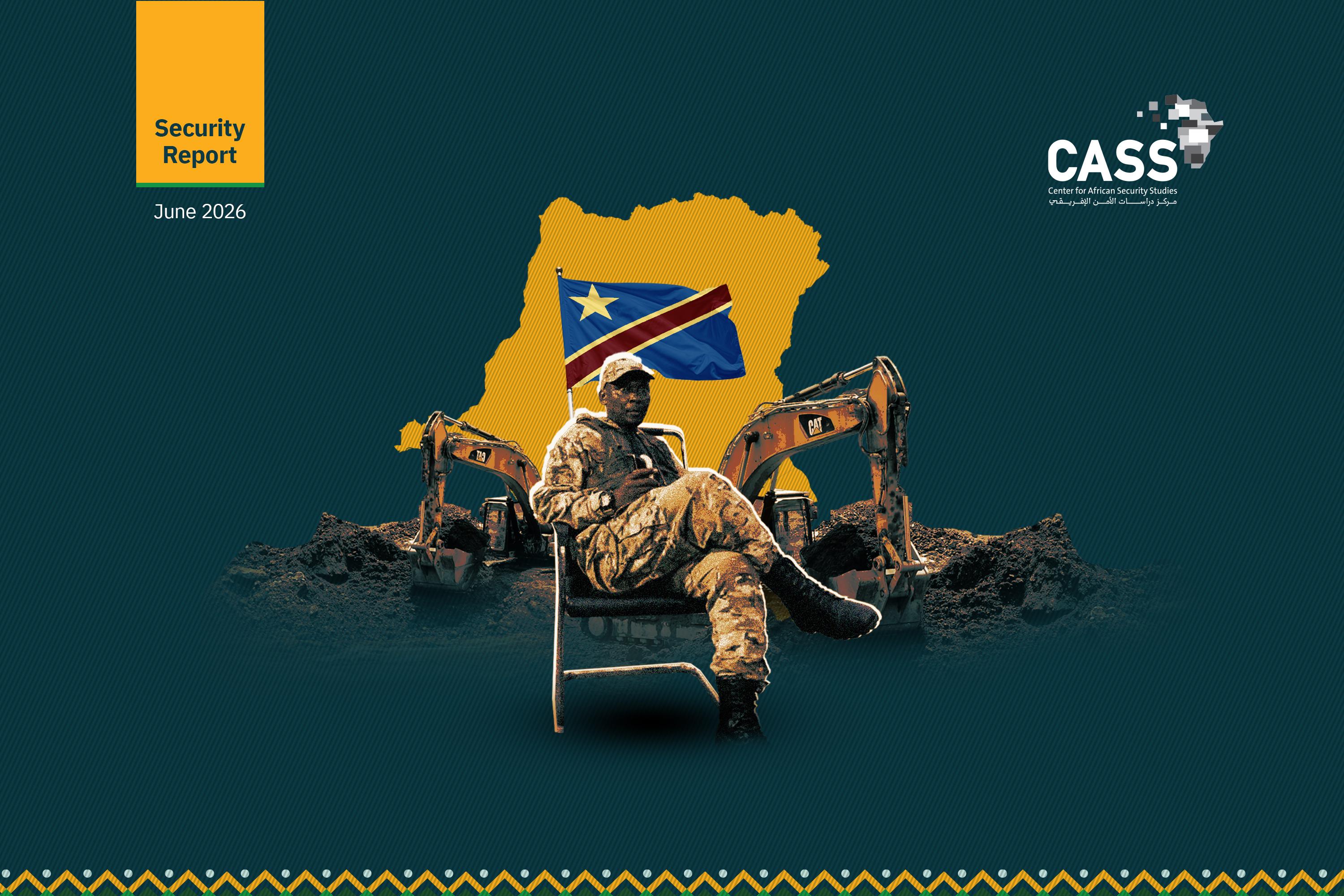
The Democratic Republic of Congo has witnessed, in recent years, a marked escalation in the militarisation of the mining sector, amid a growing state reliance on the army and security forces to protect mines and strategic mineral transport corridors, particularly in the country's east. This orientation is the product of a complex interplay between armed conflict, the illicit economy, and international competition over rare resources — a confluence that has transformed the mining sector from a potential economic lever into one of the most prominent drivers of security and political instability in the country.
The Democratic Republic of Congo possesses vast reserves of critical minerals, including cobalt, copper, coltan, gold, and lithium — minerals that feed directly into global technology industries, including batteries, electric vehicles, and semiconductors.
As the global transition toward clean energy and advanced technology accelerates, the geopolitical importance of these resources has grown, raising the level of international competition over them — whether through multinational corporations or through regional networks of influence.
Yet this mineral wealth is concentrated in regions that have historically suffered from state fragility and weak government control, particularly in the North and South Kivu provinces, Ituri, and the border areas with Rwanda and Uganda.
Armed groups have exploited this reality to seize mines or impose levies on mining and transport operations, giving rise to what can be described as a "mineral war economy," in which minerals have become a primary source of militia financing and the perpetuation of conflict.
In this context, the Congolese government has moved to expand the military's role in protecting the mining sector, deploying army units around strategic mines and reinforcing the security presence along transport routes and border crossings.
Recent months have also seen indicators of deeper integration between security and economic interests, to the point where the protection of mines is now presented as a matter of Congolese national security, rather than merely an economic or policing task.
Yet this militarisation carries within it several complex problems. On one hand, the authorities contend that a military presence is necessary to prevent armed groups from seizing resources or using them to finance their operations.
The government also seeks to reassure international investors — particularly in the strategic minerals sector — that the state is capable of protecting investments and guaranteeing the continuity of production and export.
On the other hand, this approach faces widespread criticism due to the track record of certain military units in corruption and indirect involvement in illegal mining networks. Rather than ending the parallel economy, some military elements have participated in imposing informal fees, providing protection to smuggling networks, or reaching understandings with local armed groups. In this way, the militarisation of mines has shifted from being a tool for controlling disorder to becoming part of the economic structure of the conflict itself.
The militarisation of mining also reflects the escalating geopolitical dimension of the Congolese crisis. The minerals of eastern Congo have become part of the international competition among major powers, particularly as global demand grows for minerals used in technology industries and clean energy.
Within this framework, certain international powers view the stability of mining regions as a strategic issue that transcends the borders of Congo itself. Consequently, international interest in building "secure" and "conflict-free" supply chains is growing, which in turn pushes the Congolese government to present its security approach as a prerequisite for protecting those chains.
Regionally, the situation is further complicated by mutual accusations between Congo and Rwanda regarding support for armed groups operating near mining areas, particularly the M23 movement.
Kinshasa accuses regional parties of seeking to benefit from mineral smuggling or of deploying armed groups as a card of influence within the Congolese east. As a result, mining zones have become part of an open regional power struggle in which security calculations and economic considerations are deeply intertwined.
In the foreseeable future, the militarisation of mine protection is expected to continue — and may even expand — as the importance of strategic minerals in the global economy grows.
Yet the success of this policy will remain contingent on the state's ability to reform its military institution, impose oversight over corruption networks, and integrate local communities into the returns of mineral wealth. The military approach alone may provide temporary protection for mines, but it will not address the root causes of the crisis — rooted in weak governance, marginalisation, and the war economy.
Accordingly, the fundamental challenge before the Democratic Republic of Congo is not merely securing mines, but preventing natural resources from becoming a permanent factor in the perpetuation of conflict. For as long as minerals remain a source of armed power and the informal economy, the militarisation of mining will remain part of a broader crisis concerning the nature of the Congolese state and the limits of its actual sovereignty over its eastern regions.