

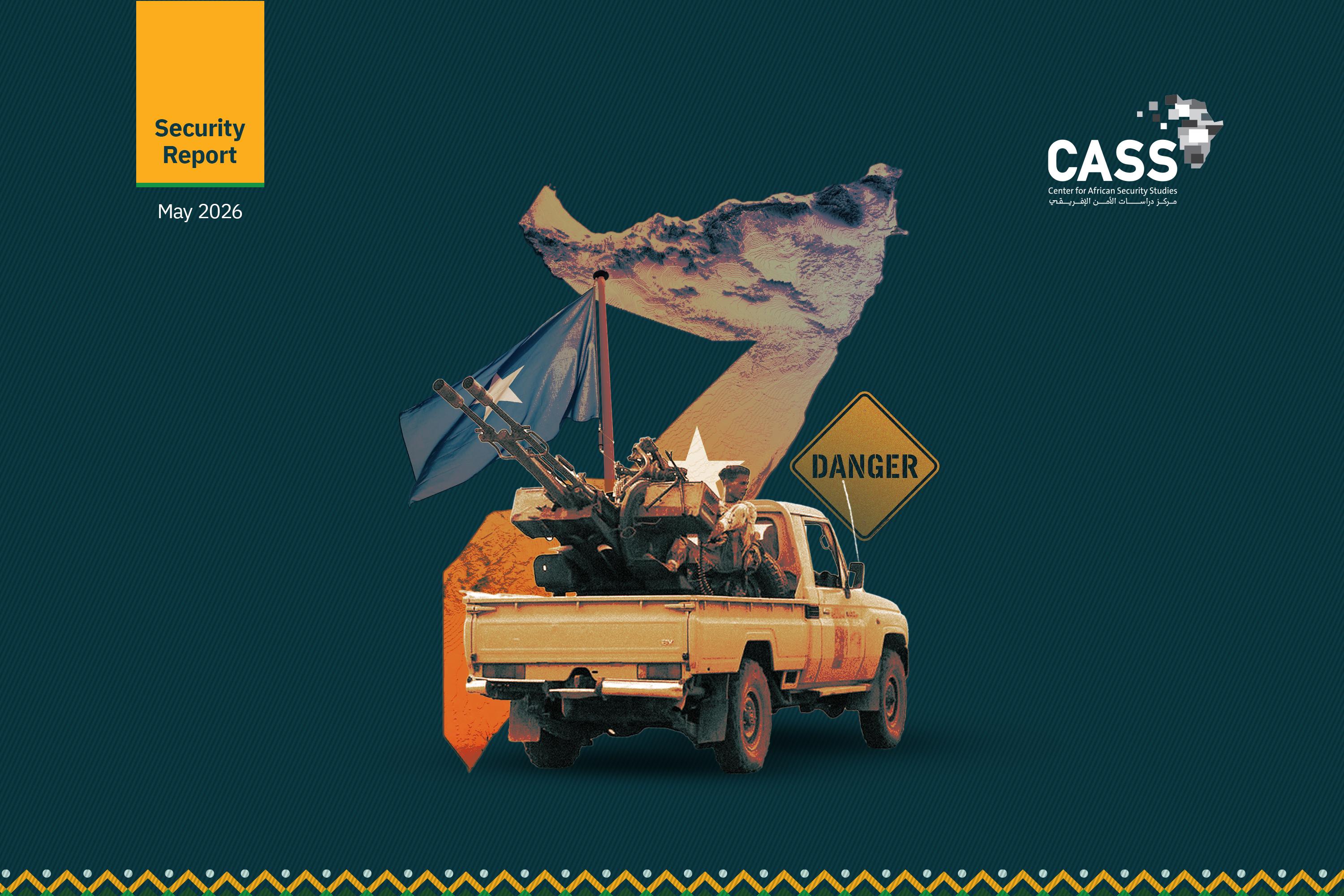
The Gedo region in southern Somalia is witnessing a renewed escalation in political and security tension between the Somali Federal Government and Jubaland State — a development that reflects the depth of the structural crisis afflicting the relationship between Mogadishu and the federal member states, and confirms that Gedo has become one of the most important arenas of competition for influence and legitimacy within the Somali state.
During the second week of May, new indicators emerged of mutual escalation between the two sides, manifested in political and security movements linked to the cities of Dolo and Beled Hawo, alongside an intensification of the dispute over the management of Dolo Airport and the security and administrative presence within the region.
These developments come in the context of a prolonged conflict between Somali President Hassan Sheikh Mohamud and Jubaland State President Ahmed Mohamed Islam "Madobe," over the limits of the federal government's authority, the nature of the federal system, and the future of electoral and security arrangements in the country.
Gedo holds exceptional strategic importance for several reasons. It represents the overland gateway between Somalia, Ethiopia, and Kenya, and constitutes an important logistical hub for military, commercial, and humanitarian movements. Control over cities such as Dolo and Beled Hawo grants any party direct influence over supply lines and border crossings, in addition to shaping the clan balances across southern Somalia.
Since the acute crisis between Mogadishu and Jubaland in 2019, Gedo has been transformed into a contested zone of influence. While Jubaland considers it an integral part of its administrative authority, the federal government has gradually worked to build local networks of influence within the region, capitalizing on clan divisions and the support of certain political and security figures opposed to Madobe.
In recent weeks, indicators emerged of the federal government's efforts to strengthen its presence in Dolo — whether through security arrangements or by backing local figures aligned with it — a step that Jubaland interpreted as an attempt to undermine its authority within Gedo and to redraw the balance of power in the south. The recent movements have also brought the name of Abdirashid Hassan Janan back to the fore, as one of the most prominent actors linked to federal influence within the region, which has raised Jubaland's concerns over the possibility of his being used to rebuild local alliances hostile to it.
In response, Jubaland has attempted to send clear deterrence messages through military demonstrations and movements near Beled Hawo, alongside an escalation of its political discourse against Mogadishu — accusing the federal government of seeking to impose facts on the ground by force and of exploiting state institutions to settle political scores with its opponents.
Jubaland also accused the government of causing disruptions to air traffic at Dolo Airport — an additional indicator of the intensifying competition over the instruments of administrative and logistical control in the region.
The current crisis appears to extend beyond a mere local dispute over administrative influence, being directly linked to the upcoming political and electoral preparations in Somalia. Mogadishu is seeking to reshape the political environment in the federal member states in ways that guarantee a reduction in the influence of its regional rivals, while Jubaland views what is unfolding as an attempt to weaken the autonomy of the states and to recentralize power in the hands of the federal government.
Regional factors also play an important role in complicating the picture, particularly given the indirect Ethiopian presence in the border area of Dolo and the region's sensitivity with regard to security movements related to the fight against Al-Shabaab. Multiple parties fear that the continued tension between Mogadishu and Jubaland could weaken security coordination in the south of the country, thereby granting Al-Shabaab an opportunity to re-expand and exploit the existing political divisions.
Based on current developments, the federal government is expected to continue strengthening its presence within Gedo, met by countermoves from Jubaland — a dynamic that could lead to limited skirmishes or proxy security clashes between local forces aligned with each side.
Should one of the parties — most likely the federal government — succeed in imposing new arrangements within Gedo through the use of security, clan, and administrative tools, this would open the door to a broader crisis with Jubaland and further deepen the fragility of the Somali federal system.
Ultimately, the Gedo crisis reveals that the conflict between Mogadishu and Jubaland is no longer a mere passing political dispute, but has become part of a broader battle over the shape of the Somali state and the distribution of power within it. With the absence of a comprehensive political settlement between the center and the member states, Gedo appears poised to remain one of the most combustible arenas in southern Somalia in the period ahead.