
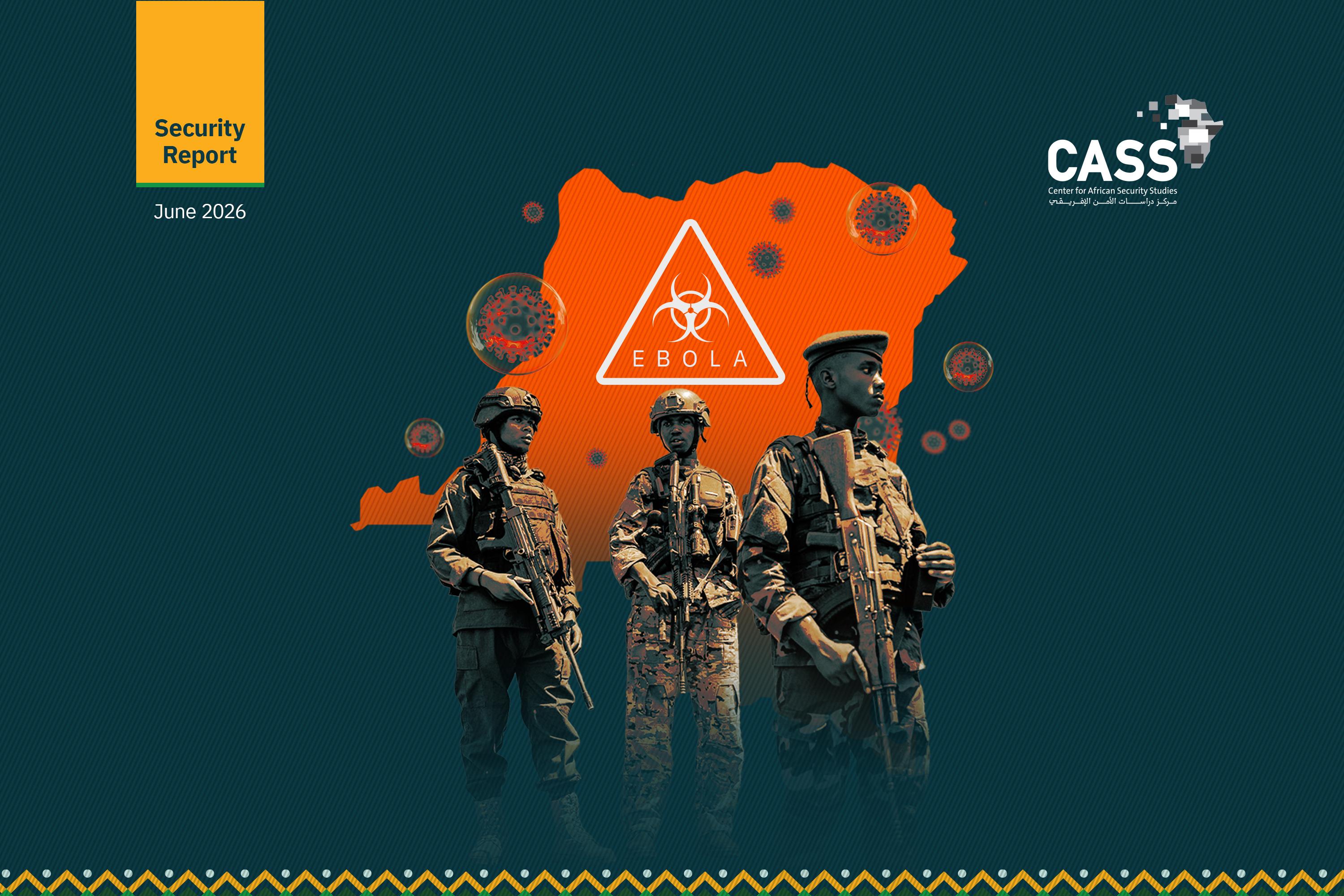
The outbreak of the Ebola virus in eastern Democratic Republic of Congo represents a complex model of the intersection between health threats and security fragility — a situation in which the disease is no longer merely an epidemic crisis, but has become a factor that both influences and is influenced by the country's security, political, and military structure. The latest outbreak comes in the context of an extremely volatile environment, particularly in the eastern provinces of North Kivu and Ituri, where multiple armed groups operate, most notably the March 23 Movement (M23), local factions, and groups linked to cross-border smuggling networks.
From a security standpoint, the state of instability has directly contributed to facilitating the spread of the disease and complicating containment efforts. The areas recording infection cases lie within zones suffering acute weakness in state control, which limits the capacity of health authorities to implement surveillance, isolation, and vaccination procedures.
The continuation of armed clashes and military movements has also led to widespread population displacement, which has increased the likelihood of contagion spreading among local communities and across the borders with Uganda, South Sudan, and Rwanda.
In addition to this, the health infrastructure itself has come under growing security pressures. Medical teams and relief organisations have faced significant difficulties in accessing affected areas due to armed threats, and during previous outbreak waves, direct attacks on Ebola treatment centres and the deliberate targeting of health workers were recorded.
This reality has created an environment of distrust between local populations and the authorities, particularly in areas where state institutions are viewed negatively due to corruption, violence, or ethnic divisions.
The security factor has not been limited to direct armed threats; it has also encompassed the informal economy and cross-border smuggling networks. Wide segments of the population in eastern Congo depend on informal trade and continuous cross-border movement, making the imposition of health restrictions extremely difficult. Armed groups further exploit weak border oversight and the fragility of state institutions, creating an ideal environment for the spread of contagion without any real capacity for tracing or containment.
Conversely, the spread of Ebola itself is increasingly affecting the security situation in the DRC. The disease exhausts the state's security and service institutions by diverting resources and capacities toward the emergency health response, thereby reducing the government's ability to maintain security in conflict zones.
The decline in basic services and rising mortality rates also deepen popular discontent, which armed groups may exploit to consolidate their local influence or recruit new members.
The risk of the health crisis transforming into a multiplier of political and social fragility is particularly pronounced here, especially if the outbreak is accompanied by a decline in international support or inadequate humanitarian funding. Local communities that feel isolated or neglected become more susceptible to the spread of rumours and conspiracy theories — as occurred during previous waves, when some residents refused to cooperate with health teams or regarded quarantine measures as part of a political or security intervention against them.
The Ebola outbreak also poses regional security challenges that extend beyond the borders of the Democratic Republic of Congo. The prospect of contagion spreading to neighbouring countries places pressure on border systems, migration, and regional security coordination, particularly in the Great Lakes region, which already suffers from chronic fragility.
Any expansion of the disease could also lead to the tightening of border restrictions and the disruption of local trade, thereby exacerbating economic and social tensions in border areas.
Current data suggest that the relationship between security and health in the Democratic Republic of Congo has become a circular one: the absence of stability accelerates the spread of the epidemic, while the epidemic in turn deepens manifestations of fragility and division. Containing Ebola can therefore not succeed through a health-only approach, but requires an integrated security-developmental approach encompassing the protection of medical teams, the building of community trust, improved border management, and an expanded state presence in fragile areas — in parallel with the continuation of international and regional support.