
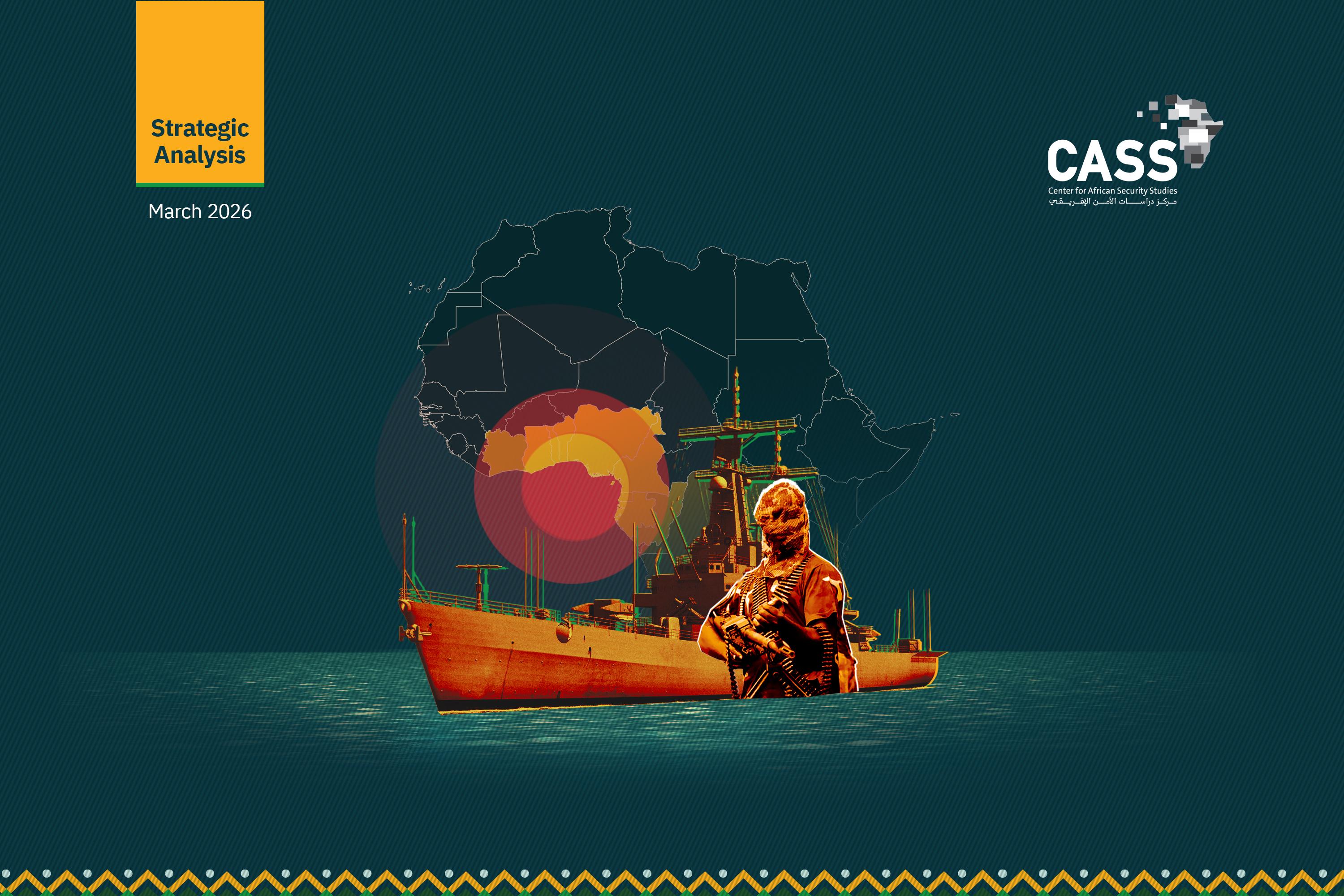
The Gulf of Guinea has emerged as a strategic focal point in global competition, as in international attention shifts from traditional efforts at combating piracy to a fierce struggle over military bases, energy routes, and critical minerals, transforming the region into an arena for testing the influence of major powers.
China is pursuing a long-term strategy aimed at establishing a permanent foothold on the Atlantic Ocean. Equatorial Guinea, with its deep-water port of Bata, stands out as a strategic target for China’s first permanent naval base in the region. Through this, Beijing is seeking to break the Western monopoly on Atlantic security and to secure resource shipping lanes heading east.
In parallel with its military ambitions, Beijing is leaning on the tools of economic diplomacy, through a “zero tariff” policy which came into effect at the beginning of 2026. This aims to integrate the economies of the Gulf of Guinea countries into Chinese markets, thereby reducing the likelihood they will adopt political positions that conflict with Chinese interests.
By contrast, Russia has continued its hybrid expansion, achieving strategic breakthroughs through port access agreements, such as in Togo, thus providing its African Corps—formerly the Wagner Group—with maritime supply platforms to bolster its terrestrial influence in the Sahel. Moscow is also using cultural and educational centers as fronts for reconnaissance and technical training operations, paving the way for transforming these soft power ties into consolidated defense alliances.
The U.S. and other Western powers, meanwhile, are attempting to regain the initiative by intensifying naval exercises focused on drone technology, aimed at monitoring Chinese and Russian activity. They are also offering economic alternatives through mining-related infrastructure projects, such as the Lobito Corridor, a strategic 1,300-km railway and logistics axis connecting Angola’s Port of Lobito to mineral-rich regions in the Democratic Republic of Congo and Zambia. This underscores a drive to prevent countries in the region from being completely drawn into the Eastern axis under the pressure of debt.
The balance of power in the region is marked by a complex interplay between security in the Sahel and around the coasts of the Gulf of Guinea. Over the past decade, insecurity has spread from landlocked Sahel countries toward coastal states like Benin, Togo, and Côte d’Ivoire, as armed groups seek access to ports to secure their arms supply lines and facilitate smuggling.
This shift has led to an unprecedented militarization of maritime security, transforming the Gulf of Guinea from an area of international cooperation against piracy into an arena where various powers flex their military muscle.
This is clearly evident in recent joint maneuvers by the BRICS+ countries, raising concerns within NATO about the emergence of a “parallel security architecture” that threatens the West’s traditional dominance in this vital region and imposes a new security reality characterized by military polarization and multipolar allegiances.
Indeed, the most likely future scenario is one of sharp polarization, with the Gulf of Guinea states potentially splitting into two axes: one pro-Western, led by Nigeria and Ghana, and the other aligned with the Sino-Russian axis, encompassing Equatorial Guinea, Togo, and the Sahel countries. This could lead to a complete paralysis of regional organizations such as ECOWAS.
In another scenario, the countries of the region might succeed in implementing a form of “active neutrality” by granting China trade privileges at the same time as gaining American security guarantees. While this could avoid complete alignment with either side, exceptional diplomatic skill would be required to achieve it.
The riskiest scenario would be a “security explosion” resulting from the increased activity of armed groups in the northern regions of coastal states on the Gulf of Guinea. This could prompt these countries to formally request a Russian military intervention, which would inevitably lead to a diplomatic clash and harsh Western sanctions, deepening the region’s economic woes.