
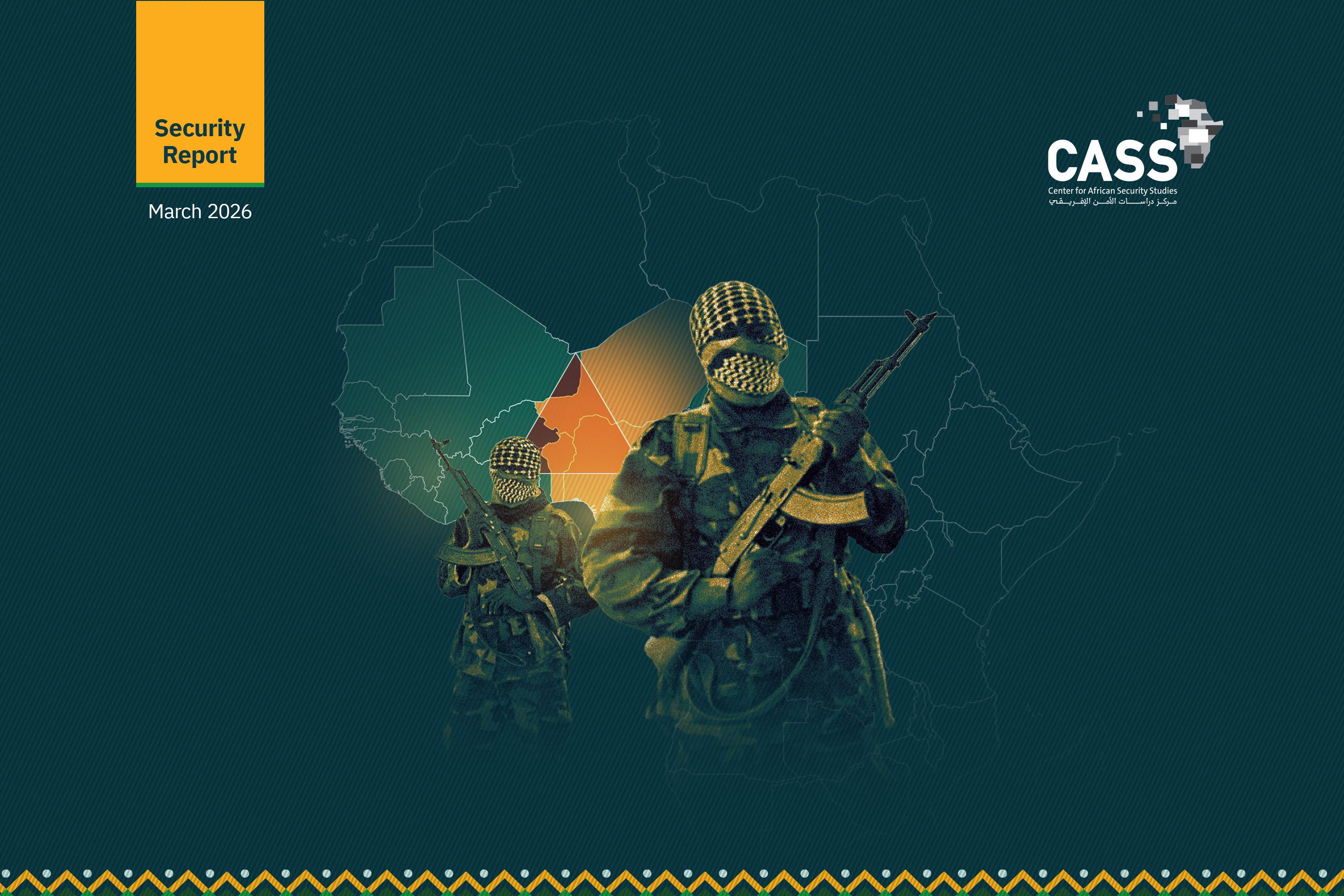
In recent months, the vital border region between Niger, Nigeria, and Benin has seen a marked uptick in attacks by jihadist groups. This reflects a gradual shift in the focus of their armed activity from the heart of the Sahel to the region’s southern periphery, which has become one an important new front for organizations linked to global jihadist networks, particularly Islamic State group (IS) and Al-Qaeda affiliates.
The region is vital due to its sensitive geographical location. It lies within a belt connecting the Sahel to the Gulf of Guinea on the Atlantic coast of West Africa. This belt, encompassing forested areas and porous borders that facilitate the clandestine movement of fighters and weapons, has become an attractive operational space for armed groups facing growing military pressure in Mali, Burkina Faso and elsewhere.
Jihadist organizations appear to be seeking to reposition themselves by opening a southern front that would allow them to expand their activities into countries lying on the Gulf of Guinea.
One of the key players in this escalation is the Islamic State West Africa Province (ISWAP), which emerged from a split within Nigerian armed group Boko Haram. This group has developed a growing capacity to carry out complex operations, drawing on combat experience accumulated during years of fighting in northeastern Nigeria and the Lake Chad basin.
Groups affiliated with Al-Qaeda are also active in the region, operating as part of the Front for the Victory of Islam and Muslims (known by its Arabic acronym JNIM), a coalition of armed factions in the Sahel.
These group’s recent tactics indicate a shift in the underlying nature of their operations. Instead of relying solely on hit-and-run attacks, some have begun carrying out sophisticated ambushes against security forces, targeting villages and local infrastructure. Some have even established informal systems of governance in rural areas.
These organizations also exploit local smuggling networks—whether involved in fuel, weapons, or irregular migration—to finance their operations and expand their influence.
Another factor adding to the escalating violence is the fragility of government control over the border regions, which suffer from weak security infrastructure and a lack of basic services, creating an institutional vacuum that armed groups have exploited to gain local support or impose their control by force.
The complex nature of the border area between the three countries also makes it difficult to conduct coordinated security operations, especially given the limited sharing of intelligence among their governments.
Yet this escalation could have far-reaching regional repercussions. For a start, it threatens to spread instability to countries that were, until recently, relatively far removed from the epicenter of violence in the Sahel—such as Benin, Côte d’Ivoire, and Togo.
Moreover, it could lead to a reshaping of regional security priorities, as these countries are forced to strengthen their military presence on their northern borders and step up their cooperation with international partners.
In the short term, jihadist groups are likely to continue testing the capabilities of states in the Sahel through a series of limited but frequent attacks, aiming to wear down security forces and gradually expand their own areas of influence.
In the medium term, if these groups succeed in consolidating their presence in the border region, this could lead to the emergence of a jihadist corridor stretching from the central Sahel to the Gulf of Guinea, a scenario that is causing increasing unease among African governments and international actors alike.
Based on the situation at present, the border triangle between Niger, Nigeria, and Benin appears to represent one of the most important emerging arenas in the fight against jihadist groups in Africa. Accordingly, the course of events in this region over the next two years could be decisive in determining the direction of regional security in West Africa.