
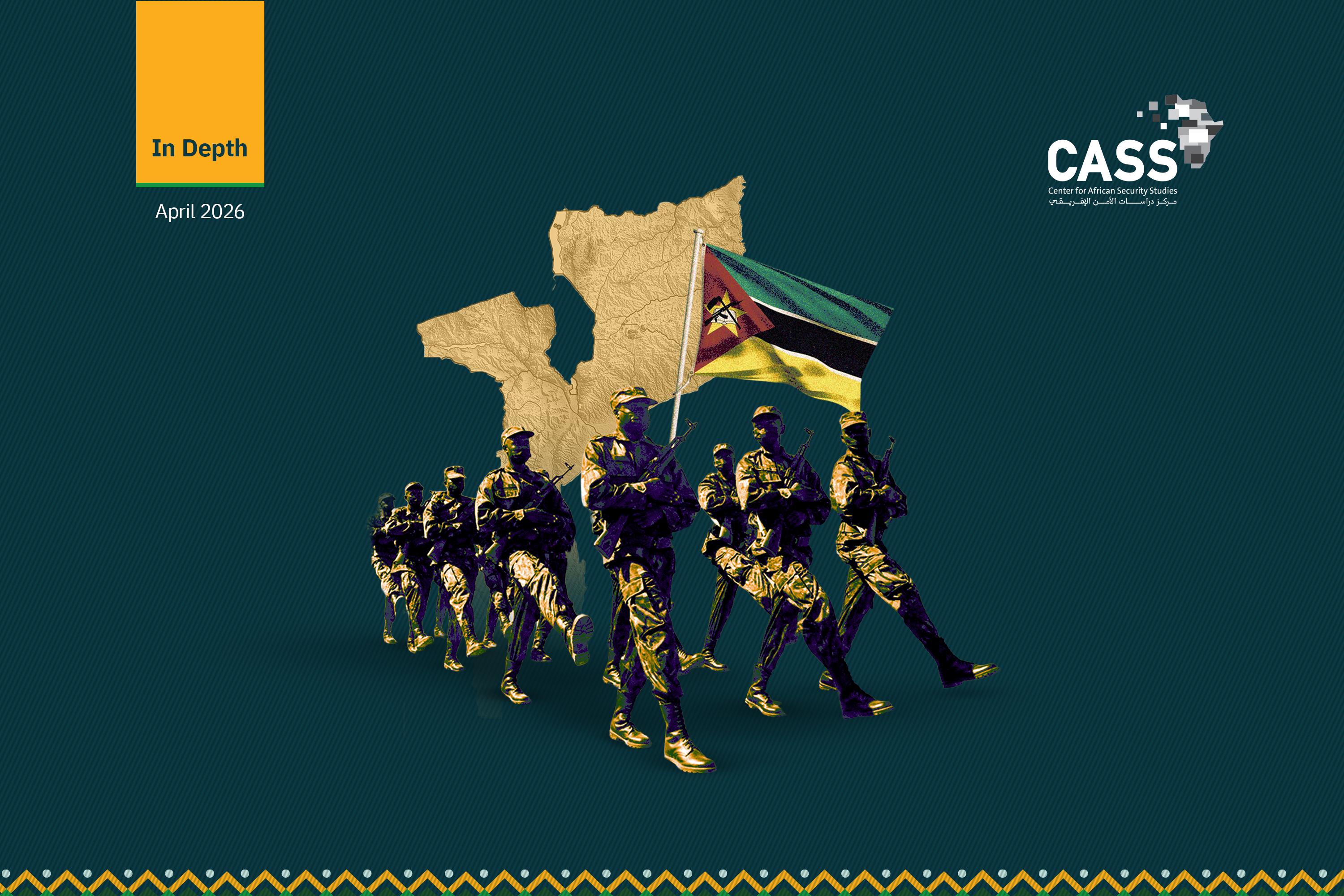
The Cabo Delgado province in northern Mozambique is experiencing a state of fragile, relative calm following years of acute escalation tied to the activities of jihadist groups — most notably the local affiliate of the Islamic State. Yet this calm does not reflect genuine stabilisation so much as a shift in the nature of the threat: from territorial control to a more fluid war of attrition.
From an operational standpoint, available evidence points to a marked reduction in the armed groups' capacity to hold major urban centres, particularly since the intervention of Rwandan forces and the Southern African Development Community (SADC) Mission in Mozambique (SAMIM). This intervention succeeded in recovering key strategic positions and providing relative protection for energy infrastructure — most critically the natural gas facilities in the Palma area.
The armed groups have, however, repositioned themselves within rural areas and dense forest terrain, drawing on hit-and-run tactics and swift strikes against remote villages and supply lines. This shift reflects a considerable capacity for operational adaptation: a transition from a "semi-conventional insurgency" model to a "low-intensity guerrilla warfare" model, exploiting the fragility of local security structures, weak intelligence coordination, and the challenges posed by the terrain.
The persistence of poverty and marginalisation across the province continues to furnish a receptive environment for recruitment, particularly among young men with few economic alternatives.
The Mozambican government has become increasingly reliant on external military assistance, raising fundamental questions about long-term sustainability. Rwandan forces play a central operational role on the ground, while SADC forces provide a broader regional umbrella. This dependency, however, generates an "imported" security arrangement — one vulnerable to sudden disruption should any withdrawal or reduction in support materialise, whether driven by political or financial considerations.
Economically, natural gas projects remain a central axis in security and stability calculations. The return of international companies — TotalEnergies foremost among them — is directly contingent on the government's ability to guarantee a durable security environment. Despite relative improvements on the ground, the continuation of sporadic attacks sends negative signals to investors and continues to delay the full resumption of major energy projects.
The humanitarian crisis remains acute. Hundreds of thousands of internally displaced persons continue to face severe living conditions, with access to basic services severely curtailed. This factor exerts additional pressure on the authorities and amplifies the risk of renewed violence, particularly in the absence of comprehensive development responses capable of addressing root causes.
At the regional level, the threat emanating from Cabo Delgado no longer appears confined within Mozambique's borders. It intersects with broader networks operating across East Africa — particularly in Tanzania. This transnational dimension considerably complicates the overall picture and demands deeper security coordination between affected states, a degree of collaboration that remains significantly below the level required.
Assessment
The current situation is best characterised as "tactical stability against a backdrop of strategic fragility." Military operations have succeeded in curtailing the armed groups' territorial control, but have not addressed the root causes of the crisis — whether in its security, economic, or social dimensions.
The most probable trajectory in the near term is a continuation of the present situation without fundamental transformation, punctuated by sporadic attacks targeting villages and secondary infrastructure. The government is expected to focus its security efforts on protecting areas of critical economic activity, even at the cost of leaving rural peripheries underprotected.
The most dangerous scenario remains linked to the possibility of a significant reduction in external support — a development that could open the door to renewed escalation. In broader terms, Cabo Delgado has not exited the conflict cycle; rather, it has moved into a more complex phase in which military resolution is increasingly difficult to achieve, and in which a comprehensive approach — one that integrates security, development, and local governance — becomes indispensable.