

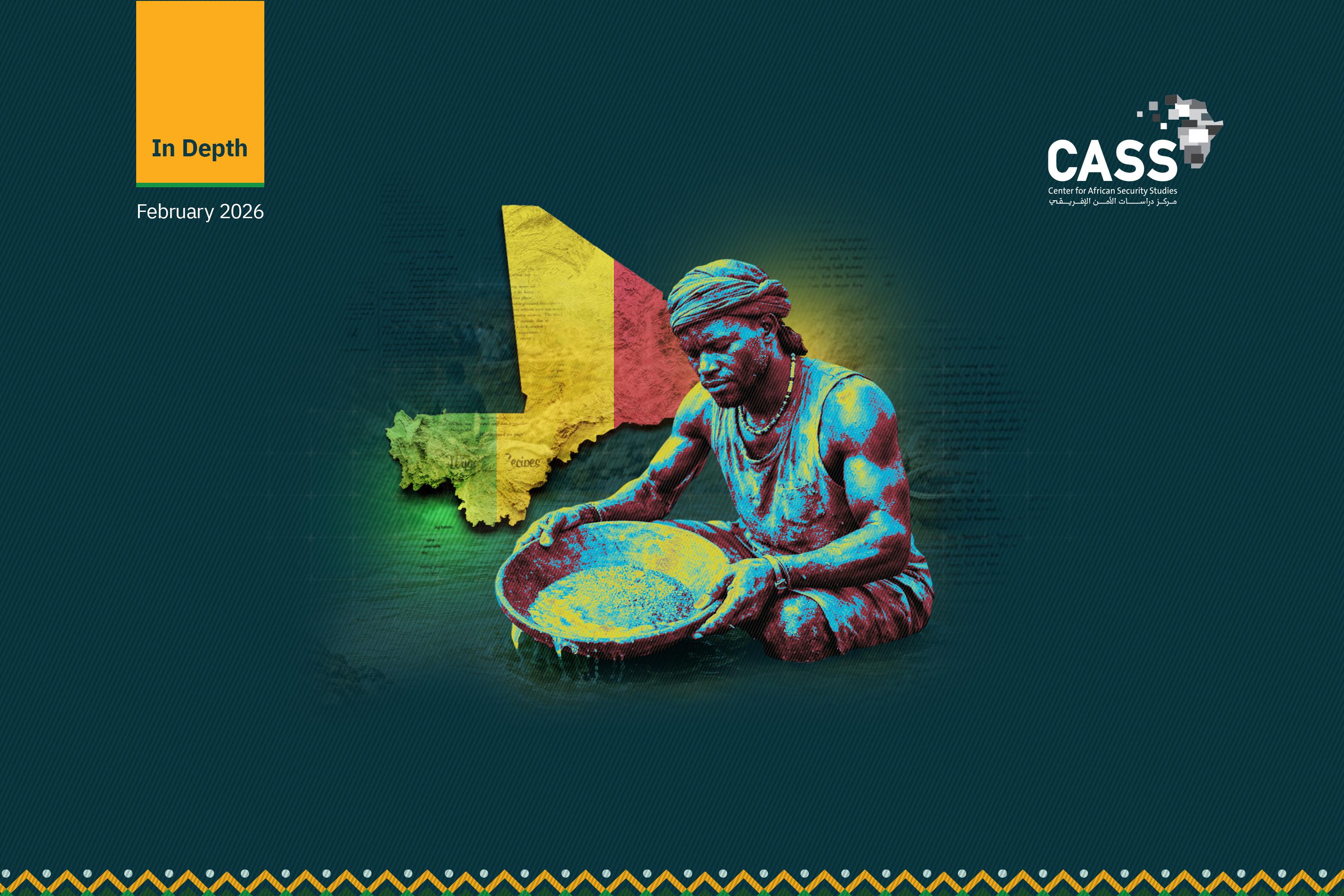
On January 19, Mali’s rulers created a new post under the grand title “Commissioner of Mining Activities, with Ministerial Rank.” This transferred oversight of the economically vital gold mining sector from the traditional Ministry of Mines to the direct control of the country’s de facto ruler, Transitional Council President Assimi Goïta.
The shift represents the culmination of Bamako’s efforts to assert complete sovereign control over Mali’s natural resources and transform the mining sector into a political and economic tool managed directly from the presidential palace.
The newly created post was filled by Hilaire Bébien Diarra, an earth scientist and former executive at Barrick Gold, a Canadian mining firm with a decades-old presence in the vast West African country.
Diarra, who has risen to prominence as a Special Advisor to the presidency, led fierce negotiations against his former company which resulted in Barrick settling tax disputes and paying hundreds of millions of dollars to Bamako’s public treasury.
With his new powers, the Presidential Commissioner has absolute authority to oversee the implementation of mining policies, review company reports, and ensure compliance with a stringent mining law issued in August 2023.
Under these changes, all existing and new contracts will be subject to review, with the aim of increasing the share of the state and local communities in mines to 35%, instead of the 20% stipulated in previous laws.
Efforts are also expected to shift from the export of raw gold to local processing through a National Refinery, which has been established to maximize the sector’s added value and create technical jobs within the country.
These “sovereign” policies led to a 23% year-on-year decrease in industrial gold production in 2025, due to the ensuing legal disputes. However, the authorities are betting that they can compensate for this shortfall by collecting substantial sums in arrears and tax dues.
The move reflects a financial shift towards an undeclared model of “administrative nationalization,” whereby traditional ministries are sidelined in favor of a small circle of presidential loyalists, to ensure swift decision-making and maintain the secrecy of deals.
While this has succeeded in recovering substantial sums (over $1.2 billion stemming from recent audits), it has also placed Bamako in a difficult position when it comes to foreign investment. The presidency’s biggest challenge in 2026 will be maintaining the inflow of investment needed to develop new mines within a changing and unpredictable legal environment.
Traditional Western investors are among the hardest hit by these changes. Barrick, which is Canadian, and Resolute Mining of Australia are among the most affected; they have come under sudden pressure to pay tax settlements worth hundreds of millions of dollars, and their profit margins have been slashed by the increase in the state’s share in mines under the new mining law.
These changes have also created a state of legal uncertainty, which will likely push international financial observers to downgrade the country’s credit rating, making it even more difficult to secure financing for new exploration projects.
The decline in the influence of European and Western companies in the Malian mining sector represents a particularly notably geopolitical and economic loss for France, which had long relied on a stable flow of resources from the Sahel region to bolster its own economy.
Mali’s Transitional Council, the de facto presidency, stands to be the biggest beneficiary both politically and financially. Direct control over the sector has provided it with an immediate influx of cash to the public treasury, bypassing the traditional bureaucratic apparatus, which helps the regime to finance its military operations and buy loyalty at home, despite international sanctions.
Russia is also expected to benefit from the changes, potentially securing exploration and mining concessions in place of departing or negatively impacted Western companies, and in exchange for providing security support to bolster the regime in Bamako.
Chinese companies could also benefit from the restructuring of contracts, as they are skilled in adapting to high-risk environments and may offer proposals such as infrastructure development in exchange for mining concessions—something that aligns with Bamako’s new vision.
Markets in the United Arab Emirates are also benefiting from increased inflows of gold, whether through official channels or via the growing activity of the new National Refinery, which Bamako is seeking to connect to global gold markets in a way that bypasses European routes.
Overall, the legal change and Diarra’s appointment end the traditional influence of the Ministry of Mines and its bureaucratic structures. They also transform negotiations with international companies from a technical and legal matter into a directly political one implicating the presidency itself.