
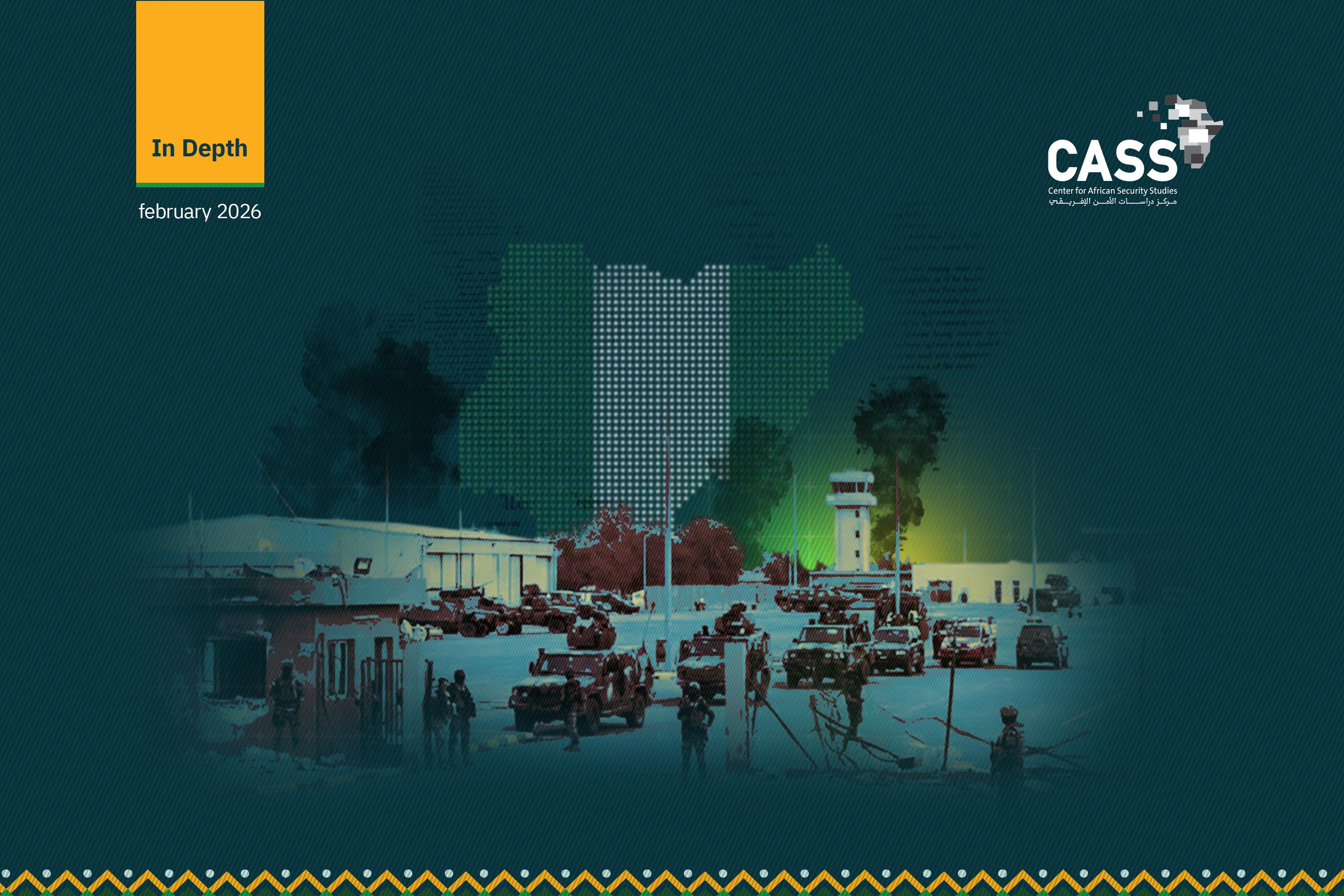
In the early hours of January 29, gunmen waged a well-coordinated attack on Diori Hamani International Airport and the adjacent Base Aérienne 101 air base in Niger’s capital Niamey. The operation was claimed by the Islamic State—Sahel Province (ISSP).
This marked a significant shift in the course of the armed conflict ravaging the Sahel region, as militants succeeded in mounting an operation not in a remote border region but in the heart of the country, targeting a key facility just 10 kilometers from the presidential palace. The base houses both a drone facility and forces from the Alliance of Sahel States.
The explosions and gunfights continued for more than two hours, during which the attackers (estimated at more than 30 fighters on motorbikes) used heavy weapons and suicide drones. The attack damaged three civilian aircraft belonging to Air Côte d’Ivoire and Asky, and set fire to an ammunition depot inside the airbase.
Russian fighters from Moscow’s Africa Corps—formerly the Wagner Group—stationed at the base fought alongside Nigerien forces to repel the attackers, preventing the attackers from taking complete control of the airport.
The attack came as the airbase’s storage facilities host a massive uranium shipment, estimated at 1,000 metric tons of yellowcake, the subject of a legal dispute with the French company Orano. This has fueled accusations from Niamey that the attack was an attempt to target the regime’s “symbols of economic sovereignty.”
The use of drones and the precise timing of the attack also hinted at the possibility of “internal facilitation” or security lapses resulting from the regime’s focus on securing the uranium shipment and protecting sensitive sites from coup attempts.
The head of the ruling military council, General Abdourahamane Tchiani, was quick to accuse France, Benin, and the Ivory Coast of sponsoring the attack, claiming that “French mercenaries” were among the attackers. These accusations were largely aimed at rallying domestic public support against regional and international adversaries.
The attack also reflects the weakening of the security belt surrounding the capital, and represented an abrupt test for Niamey’s model of “security through new partners” (i.e. Moscow). The operation is likely to deepen the regime’s security concerns and lead to further arrests and crackdowns on opposition forces under the pretext of counter-espionage.
The damage to civilian aircraft will further isolate Niger by severing its air links, as international airlines will hesitate to resume flights to an airport no longer seen as safe. This will in turn exacerbate the country’s economic crisis.