
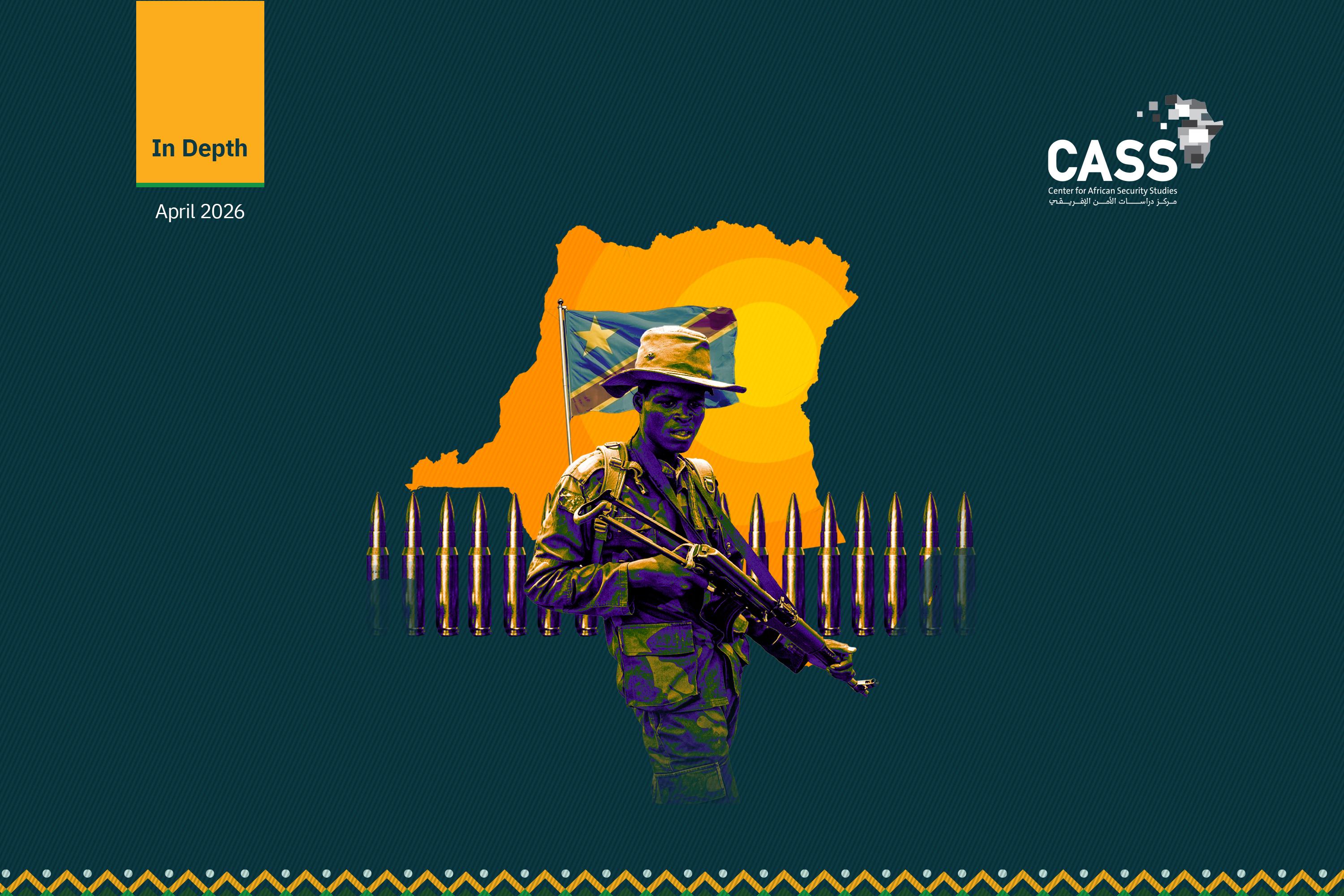
Eastern Democratic Republic of Congo — and North Kivu province in particular — is witnessing renewed escalation in the activities of the M23 movement, set against a complex security environment in which local and regional dynamics are deeply intertwined.
This escalation has reignited one of the most dangerous flashpoints in Central Africa, amid mutual accusations between Kinshasa and Kigali over support for armed groups or the use of the conflict as a tool of leverage.
On the ground, recent developments indicate that M23 has regained the initiative in certain areas, benefiting from flexible combat tactics that include the temporary seizure and subsequent withdrawal from strategic positions, while maintaining a high degree of mobility.
The movement also appears to be focusing on vital logistical corridors — particularly the roads linking major cities — threatening to sever supply lines and placing direct pressure on the Congolese armed forces.
For its part, the DRC's military faces structural challenges relating to weak coordination, limited operational readiness, and the proliferation of armed actors in the field. This has driven Kinshasa to increase its reliance on semi-regular local forces (allied militias) and on external support — whether from regional missions or international partners — reflecting the fragility of its own military capacity.
The most sensitive factor in this escalation is the regional dimension. Kinshasa accuses Rwanda of providing political and military support to M23 — allegations Kigali denies — while Rwanda in turn accuses the Congolese government of cooperating with groups hostile to it, most notably the Democratic Forces for the Liberation of Rwanda (FDLR). This mutual recrimination reflects a deeper contest over influence and border security that extends well beyond the M23 question itself.
Strategically, Rwanda's behaviour can be read through the lens of a "preventive security" approach, whereby Kigali seeks to forestall the formation of hostile threats near its borders — even if that requires indirect intervention within Congolese territory. Kinshasa, by contrast, views this conduct as a violation of its sovereignty and an attempt to reshape the balance of power in a region rich in natural resources.
Economically, the escalation cannot be divorced from the struggle over natural resources — particularly strategic minerals such as coltan and cobalt — which serve as a powerful draw for local and regional actors alike. Control over mining areas and smuggling routes constitutes one of the undeclared drivers of the conflict, considerably complicating any prospective settlement.
Politically, this escalation comes at a sensitive moment domestically for the DRC, as the government faces mounting popular pressure over the deteriorating security situation — pressure that is pushing it towards an increasingly hardened rhetorical stance towards Rwanda. Kigali, for its part, is careful to preserve its image as a stable regional actor while avoiding any openly declared direct engagement in the conflict.
At the regional level, attempts to contain the escalation through African-led mediation are ongoing, but their effectiveness remains limited given the absence of trust between the two parties and the divergence of their respective interests. The proliferation of initiatives — both regional and international — without clear coordination further undermines the prospects of achieving any genuine breakthrough.
The pattern of "controlled escalation" is likely to persist through 2026, with clashes continuing without sliding into an all-out war between the two states.
The risk of broader regional escalation nonetheless remains, particularly in the event of a direct military incident or an expansion in the scope of operations. M23 is also expected to continue consolidating its positions in certain areas, capitalising on the prevailing balance of forces.
Taken as a whole, the situation in eastern Congo exemplifies a multi-layered hybrid conflict in which armed movements, regional calculations, and economic imperatives are deeply intertwined. In the absence of a comprehensive political resolution, the region will remain susceptible to recurring cycles of escalation, with the latent risk of transformation into a wider regional confrontation.