
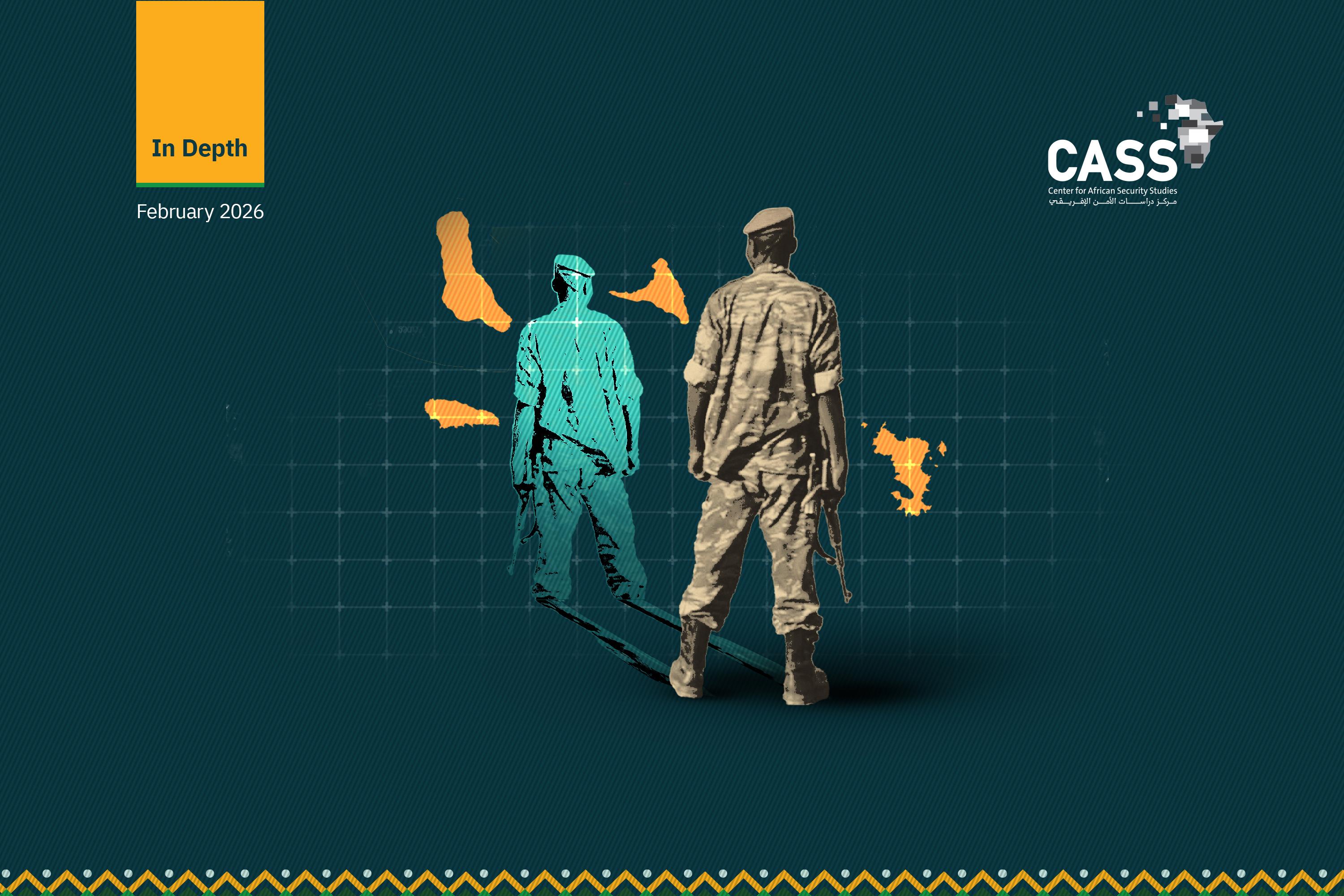
Since early February, the capital of the Comoros islands has been in an unofficial state of emergency following the creation of the so-called Special Security Apparatus under the command of the government’s secretary-general, Nour El Fath Azali—the son of President Azali Assoumani. The agency has been granted more authority than the traditional National Gendarmerie and Central Security forces, threatening to create a schism in the state’s security structure.
The crisis came to light after the surprise arrests of around 25 officers from the Gendarmerie and Central Security forces, who were then transferred to a “closed security zone” on the outskirts of the capital, directly under the authority of the Secretary-General.
The special security apparatus operates independently of the General Staff, and without coordination with the Ministry of the Interior, creating confusion in their operations on the ground.
The campaign of arrests was not limited to military personnel; it also included searches of the homes of parliamentarians and leaders of the ruling party, under the pretext of preventing “unauthorized contact” with opposition parties.
One of its most opaque aspects has been the stance of President Assoumani, who has taken no action to curb the powers of his son and Nour El Fath’s new security agency, despite appeals from the ruling party.
The growing influence of the Special Security Apparatus has sparked suspicions that the president is seeking to secure a smooth transfer of power within the ruling family by eliminating any opposition within the military establishment that might obstruct this process.
This has paralyzed the workings of parliament and created simmering tension within the National Gendarmerie, which now views the Special Security Apparatus as a threat to its existence and its status as guardian of the constitution.
This crisis places the Comoros at a dangerous crossroads. If Nour El Fath succeeds in consolidating his complete control over the levers of security and political power within the state, and in neutralizing the old guard within the army and the ruling party, this could pave the way for him to inherit power without any significant obstacles.
However, if the military leadership launches a counter-offensive to restore the unity of the state’s security apparatus, the country could descend into military and political chaos. The ruling party could even collapse, potentially giving the opposition an opportunity to regain the initiative on the streets.
In general, the emergence of a parallel security agency in a country with a long history of coups like the Comoros amounts to playing with fire. The regime is attempting to protect itself through illegitimate security tools, but in doing so, it is destroying the very institutions that uphold its legitimacy.
If this standoff continues, it could transform the Comoros into a new flashpoint in the Indian Ocean, potentially prompting intervention from the African Union to de-escalate tensions before the situation explodes on the ground.