
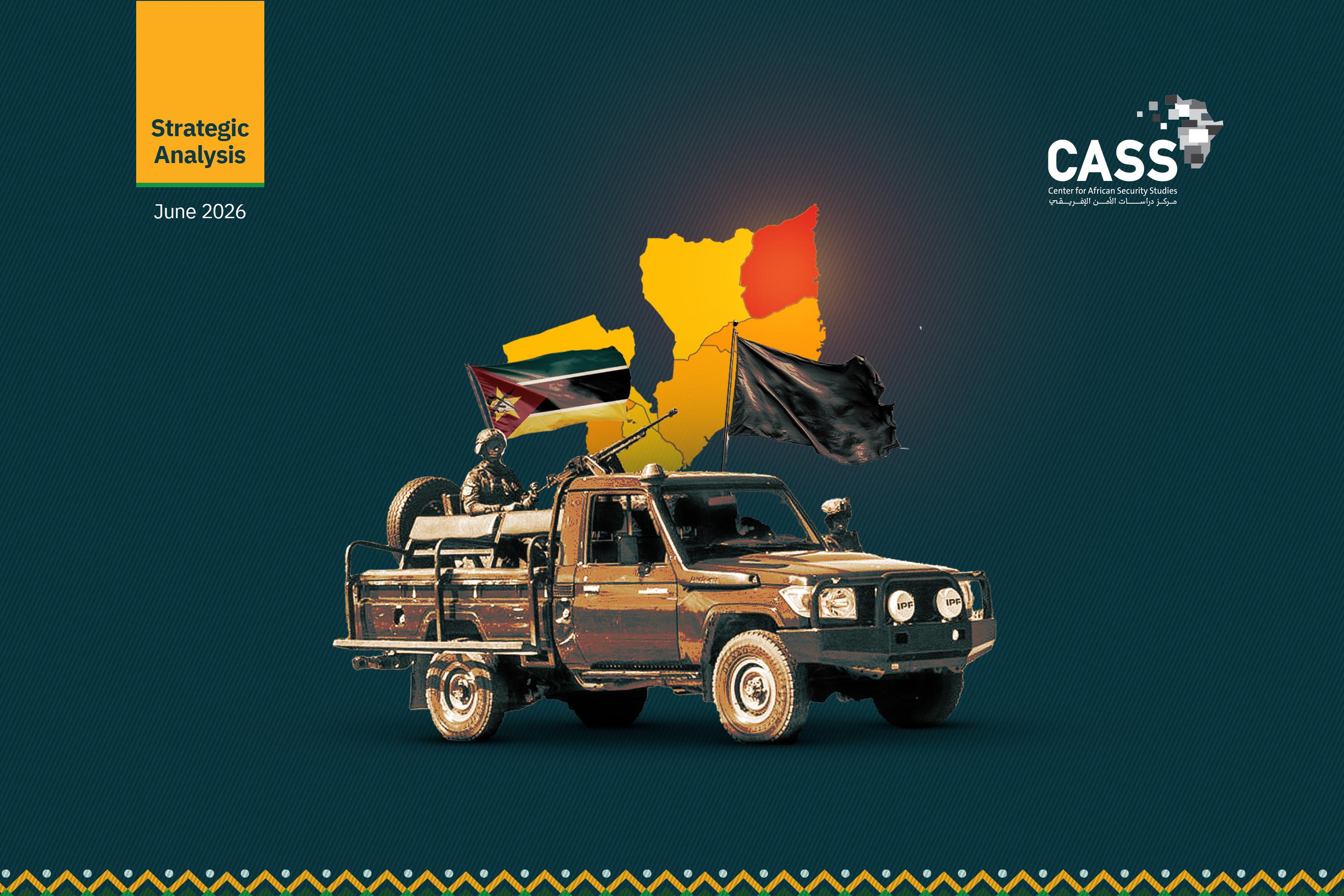
The Cabo Delgado insurgency in northern Mozambique represents one of the most dangerous emerging security threats in Africa in recent years — not only because of its armed nature, but also due to its direct links to energy security, geopolitical competition, and state fragility in East Africa. Since the insurgency erupted in 2017, the region has transformed into a complex theatre of conflict in which groups affiliated with the Islamic State organisation, smuggling networks, and international interests tied to massive natural gas projects are all intertwined. As 2026 begins, the insurgency appears to have moved from a phase of "military containment" to one of "long-term attrition."
The crisis began in Cabo Delgado province, a poor and marginalised region despite its hosting of one of the largest natural gas reserves in Africa.
Armed groups exploited economic marginalisation, weak services, and the absence of development to expand their influence among youth segments resentful of the central authority in Maputo. Over time, the group evolved from limited local cells into an armed organisation capable of carrying out complex attacks and temporarily seizing towns and strategic centres.
Although the Mozambican government managed, with Rwandan and regional support, to reclaim a number of vital areas since 2021, the insurgency has not been genuinely defeated. Rather, it has shifted to a pattern of flexible warfare relying on ambushes, rapid strikes, and redeployment into rural areas and coastal forests.
Recent developments indicate that armed groups retain the ability to launch attacks that trigger new waves of displacement, reflecting the limited extent of government control outside the main urban centres.
The most sensitive factor in the conflict is the economic and energy dimension. The region hosts major gas projects led by international companies, most notably TotalEnergies' liquefied natural gas project, which was suspended for years due to the security situation before the company announced the resumption of work at the beginning of 2026.
This decision reflects an international recognition that the stability of Cabo Delgado is no longer a domestic matter concerning Mozambique alone, but is part of global energy security — particularly given the growing European demand for alternative gas sources.
Conversely, the return of large-scale economic projects may become an additional source of tension if the benefits are not felt by the local population. A significant part of the insurgency's social base is linked to the perception that natural wealth is being exploited for the benefit of political elites and foreign corporations, while local communities remain mired in poverty and unemployment. Accordingly, any security approach not accompanied by economic and developmental remedies will remain limited in its impact.
Regionally, the Rwandan intervention has played a pivotal role in preventing a collapse of the security situation, with Rwandan forces succeeding in securing strategic areas and energy sites.
However, the future of this military presence now faces political and financial challenges, particularly in light of international pressure and sanctions that have targeted Kigali in recent months. Should Rwandan support diminish or partially withdraw, Mozambique may face a security vacuum that its national army would struggle to fill on its own, given its limited logistical and intelligence capabilities.
The crisis also reveals a broader shift in the nature of security threats in Africa. The Cabo Delgado insurgency does not resemble conventional wars; rather, it represents a model of hybrid threats that blend terrorism, illicit economies, developmental voids, and cross-border linkages. For this reason, the continuation of the conflict could transform northern Mozambique into a hub of instability extending toward the East African coast and the maritime corridors of the Indian Ocean.
It can therefore be said that the Mozambican government has thus far succeeded in preventing the total fall of the region, but has not succeeded in eliminating the root causes of the insurgency. Moreover, the current military gains appear fragile and contingent on the continuation of external support rather than on the building of an independent national capacity.
In the foreseeable future, the conflict is likely to persist in a low-intensity form, with the risk of escalation remaining ever-present whenever military pressure recedes or development and reconstruction programmes falter. The future of Cabo Delgado will be determined not only on the battlefields, but also in the state's ability to convert its gas wealth into a source of social and political stability, rather than allowing it to remain fuel for an open-ended conflict.