
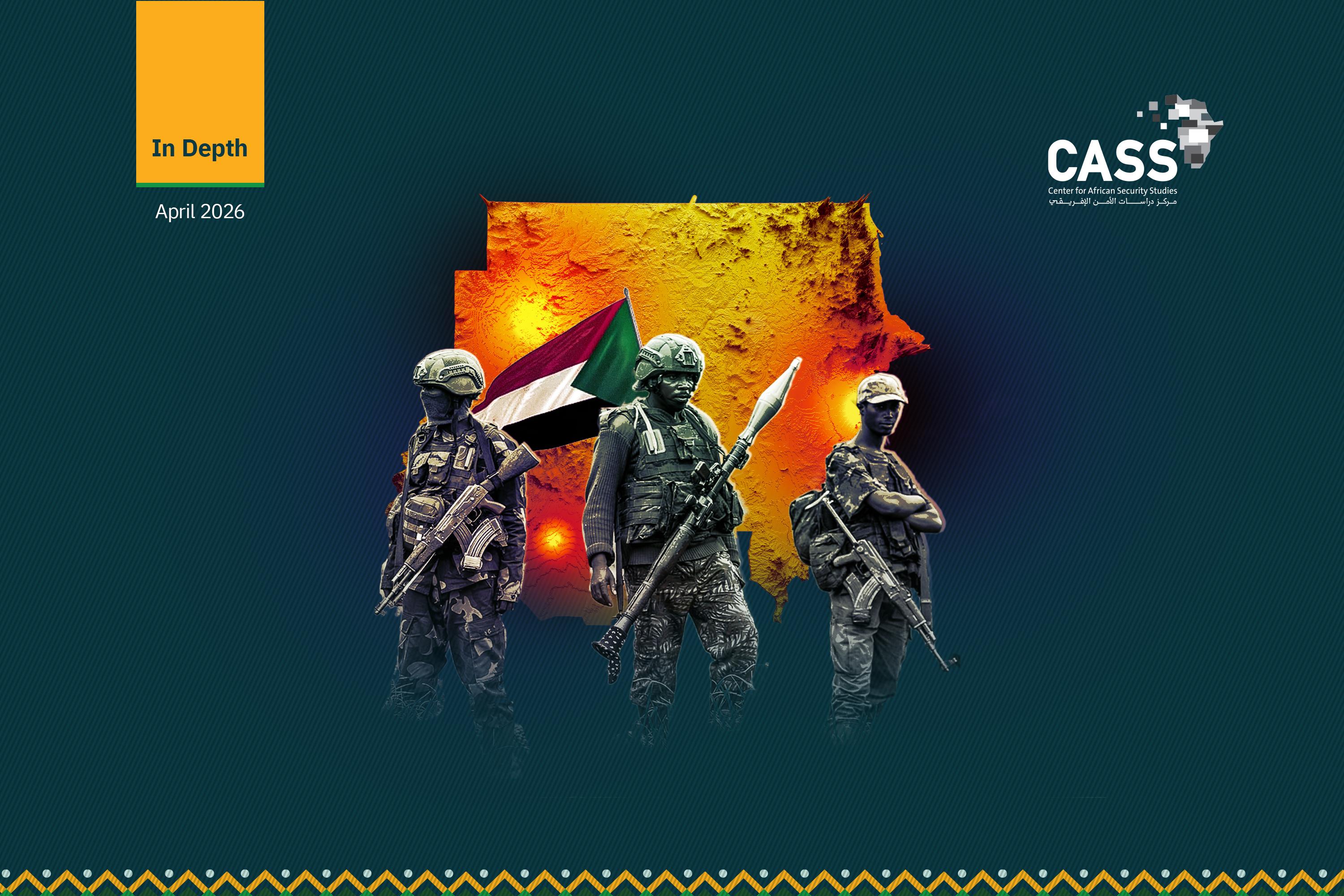
Sudan's war has entered a new phase in April that can best be described as a redistribution of the balance of control, accompanied by a multi-front operational escalation. Both the Sudanese Armed Forces (SAF) and the Rapid Support Forces (RSF) are seeking to consolidate battlefield gains in preparation for broader rounds of fighting, particularly in the Kordofan and Darfur regions.
The Kordofan region stands out as the new centre of gravity for military operations. The SAF has intensified its ground and air strikes in South and West Kordofan in a clear effort to push the RSF out of the area and open the route towards Darfur — the RSF's most important strategic stronghold.
In response, the RSF has demonstrated a capacity to hold key positions and even achieve tactical gains, including the seizure of important towns in North Kordofan — reflecting the continued pattern of back-and-forth fighting without a clear resolution.
This relative equilibrium has been accompanied by a qualitative escalation in the tools of warfare. There has been a marked increase in RSF drone usage, targeting both civilian and military sites — including schools and hospitals — resulting in dozens of casualties and a worsening humanitarian toll.
The SAF, meanwhile, has relied on concentrated air strikes and intensified ground operations, announcing the destruction of hundreds of combat vehicles and the infliction of heavy losses on its adversary. This reflects the war's gradual shift towards a "composite warfare" model combining conventional operations with low-cost technology, principally drones.
Strategically, the SAF is seeking to recapture the initiative following its earlier consolidation of control over eastern Sudan and the capital Khartoum. It currently controls the majority of states — approximately 13 of 18 — particularly in the east and along the vital Nile corridors.
Its plan entails advancing westward through Kordofan towards Darfur, with the aim of dismantling the RSF's strategic depth. The RSF, in turn, is pursuing a different strategy: consolidating control in the west (Darfur and Kordofan) while maintaining the capacity to launch targeted strikes in other areas, thereby sustaining pressure on the SAF and preventing it from achieving a decisive victory.
More broadly, developments indicate that the war is heading towards greater complexity at the local level, with growing involvement of irregular actors — whether through tribal alliances or armed groups aligned with each side. Reports also point to the continued commission of widespread violations by both parties, including the targeting of civilians and infrastructure, further reinforcing the characterisation of this conflict as a total war with catastrophic humanitarian dimensions.
Politically, recent weeks have seen no meaningful progress on the negotiating track, despite the imposition of limited international sanctions against certain RSF commanders — measures that have had no tangible effect on the course of operations. This reflects both parties' continued reliance on the prospect of military resolution, or at least the improvement of their negotiating position through battlefield performance, rather than any genuine commitment to an imminent political settlement.
On the humanitarian front, the war continues to produce one of the largest crises in the world, with millions displaced and levels of violence escalating — particularly in Darfur, where warnings of a return to genocidal patterns are growing louder. The targeting of vital facilities such as hospitals is deepening state collapse and making humanitarian response increasingly difficult.
Military operations are likely to continue at a high tempo in Kordofan and Darfur, with the possibility of the SAF launching a broader offensive towards Darfur if it succeeds in consolidating its positions in Kordofan. The RSF, meanwhile, will continue to rely on flexible tactics and targeted strikes to impede the SAF's advance. A swift resolution is not anticipated; rather, the prevailing pattern of "mutual attrition" is expected to persist.