
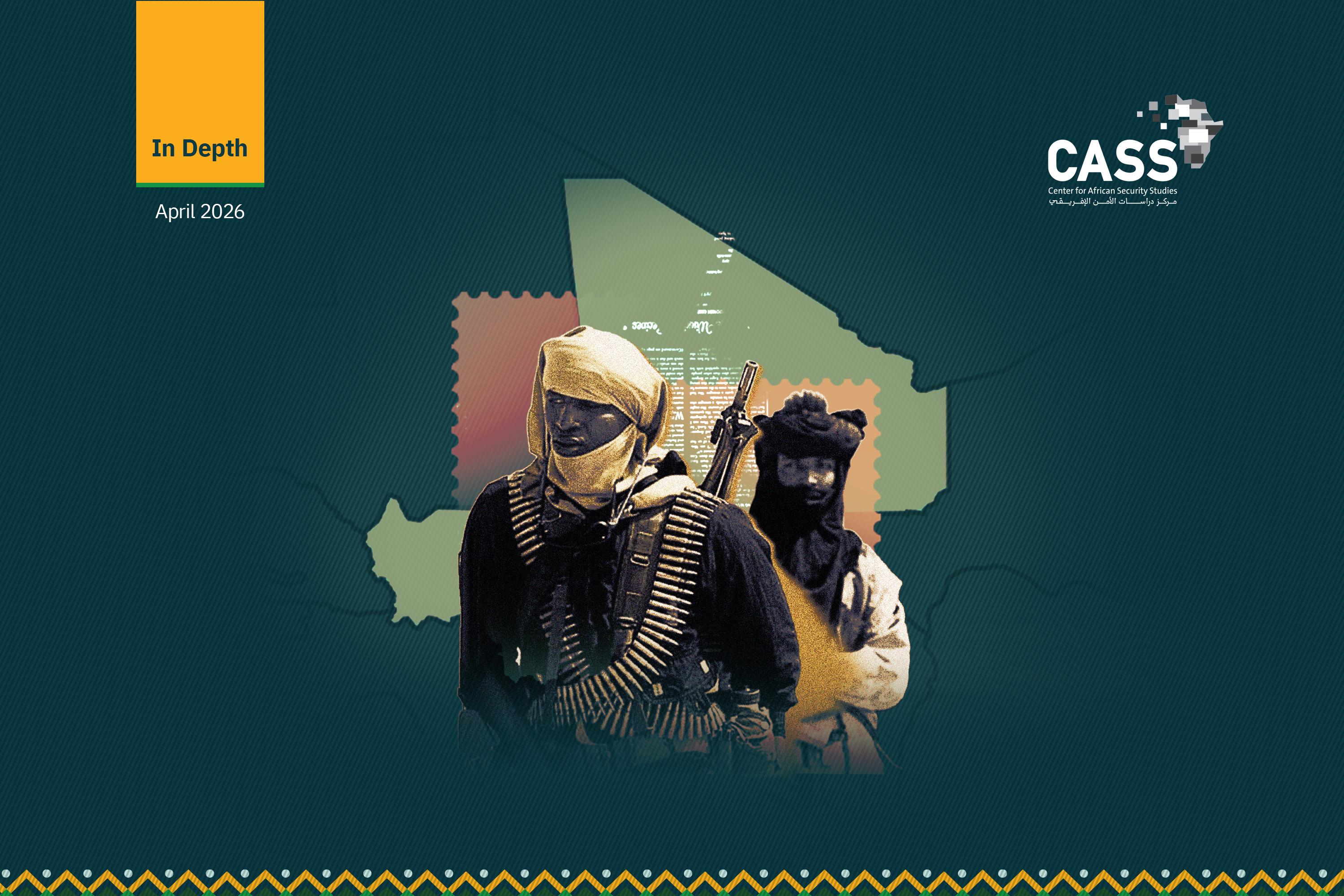
The seizure of Kidal by Tuareg rebels on 26 April constituted a pivotal development in the trajectory of the Malian war — not only because it returned the city to the grip of the "Azawad Liberation Front" less than three years after Bamako had recaptured it, but because it came within a wide coordinated offensive that exposed the fragility of military authority in Mali and the limits of the bet on Russian support.
The Azawad Liberation Front is a Tuareg coalition formed in late 2024 from the merger of factions of the "Strategic Framework for the Defence of the People of Azawad", at the forefront of which stand the National Movement for the Liberation of Azawad, the High Council for the Unity of Azawad, and wings of the Arab Movement of Azawad.
The Front announced on 26 April the full consolidation of its control over Kidal following the withdrawal of Malian forces and elements of the Russian "Africa Corps" from the city's former camp (the MINUSMA base). The Russian-Malian withdrawal was carried out under a field understanding that allowed for the safe exit of the besieged force, granting the Front effective control over the city.
Kidal did not fall in an isolated battle, but rather within a simultaneous offensive that began on 25 April and targeted Kati near Bamako, the airport's surroundings, Gao, Mopti, and Sévaré.
The offensive was executed with rare coordination between the separatist Azawad Liberation Front and the al-Qaeda-affiliated group Jama'at Nusrat al-Islam wal-Muslimin. This coordination granted the Tuareg operational weight and granted the jihadists local cover and a field base in the north. It simultaneously revealed the capacity of Bamako's adversaries to operate within a "division of roles", whereby the Tuareg concentrate on the north and Kidal while the jihadists apply pressure on the centre and the strategic depth of the state.
Kidal has historically been the stronghold of the Tuareg rebellion since the 2012 uprising, and had in practice remained under the authority of the Azawad movements until Bamako recaptured it in November 2023 with Russian support following the withdrawal of the MINUSMA mission. However, the recapture of the city did not translate into political or social consolidation; the military authority confined itself to imposing military control over an antagonistic local environment, and failed to build a settlement with the Tuareg elites, while drone strikes and the reliance on a security approach deepened the rupture with the north. Accordingly, the Tuareg's recapture of Kidal now effectively signals the failure of the "recovery by force" approach that Bamako has pursued since 2023.
Domestically, the loss of Kidal represents a severe political and military blow to the military council led by Assimi Goïta. The city carries symbolic value that far exceeds its demographic weight: whoever controls Kidal holds the key to legitimacy in northern Mali.
The simultaneity of this with the killing of Defence Minister Sadou Camara in the Kati attack compounds the impact of the shock and undermines the military council's narrative that it had restored "sovereignty" by severing ties with the West and embracing the Russian partnership. The likely outcome is greater security tightening in Bamako, and possibly a retaliatory military mobilisation, but from a defensive rather than offensive posture.
At the regional level, the fall of Kidal opens three principal ramifications. First, it raises the level of anxiety in Niger and Burkina Faso, as the success of the "pragmatic alliance" model between separatists and jihadists may be replicated across borders. Second, it embarrasses Russia, which had presented itself as a decisive security alternative to France, only to suffer a symbolic loss in Kidal. Third, it returns Algeria to the heart of the file, since Kidal concerns the security of its southern borders and places the Algiers Agreement, effectively frozen in practice, before a new test.
In the short term, the Azawad Liberation Front is expected to work on consolidating an Azawadi fait accompli in Kidal, establishing local administration, and extending pressure toward Gao.