
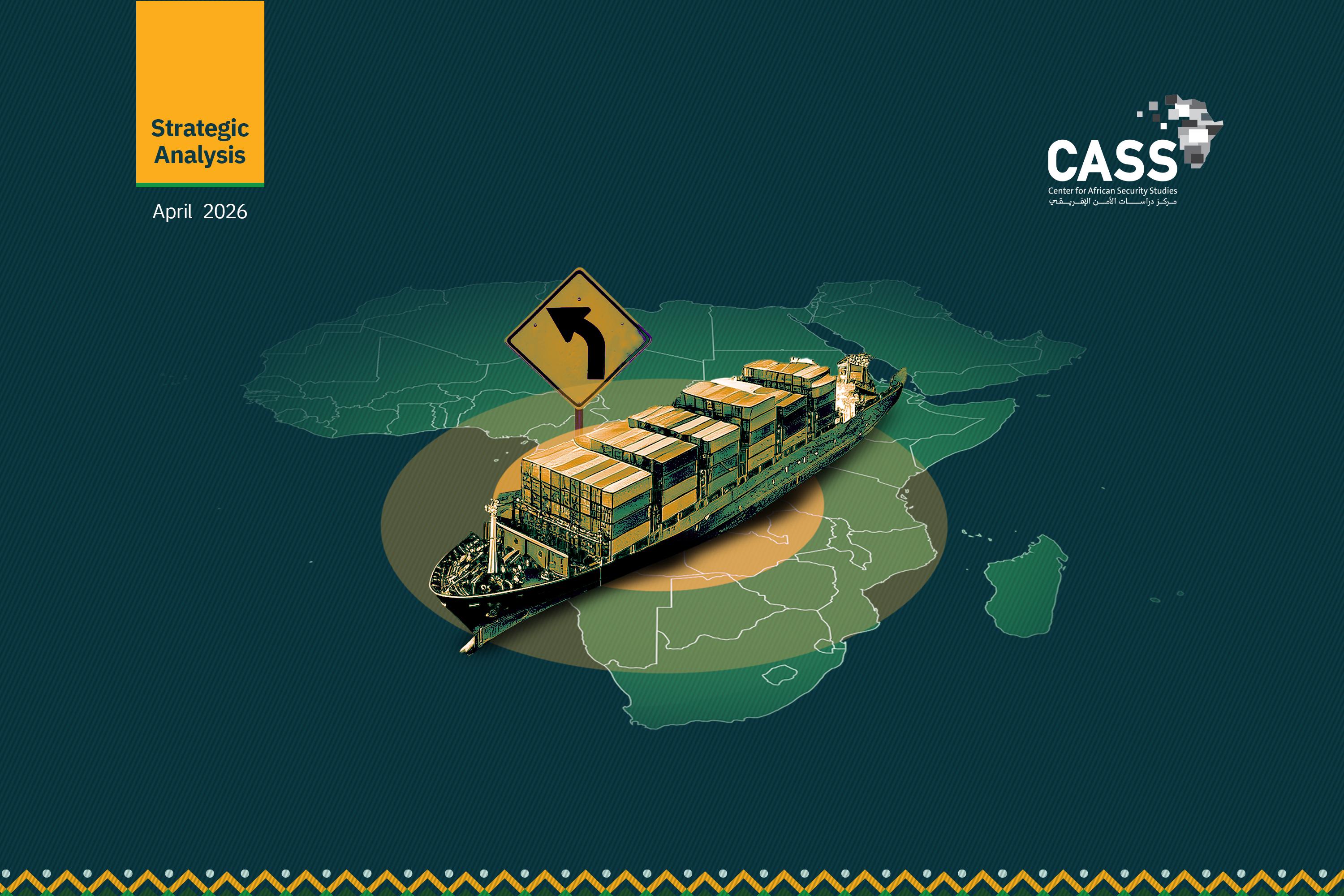
South Africa is experiencing significant shifts in its position within the global trade system, driven by the rerouting of maritime shipping away from the Red Sea and the Suez Canal towards the Cape of Good Hope route, as a result of tensions in the Middle East and the war on Iran.
This shift has revived the strategic importance of the southern maritime corridor, yet at the same time it has exposed a fundamental paradox: increased maritime traffic does not automatically translate into greater economic returns.
On the ground, data points to a notable rise in vessel movement along South Africa's southern coastline. Some ports — Cape Town among them — have recorded increases of up to 112% in diverted vessels. The overall number of ships transiting the southern route has grown considerably, with major shipping companies such as Maersk and Hapag-Lloyd turning to this corridor as a safe alternative. Yet this increase has not fully translated into direct economic activity within the ports themselves, as a significant proportion of vessels pass through without actually calling at port.
Economically, this shift has extended voyage times by approximately 10–14 days, driving up fuel, insurance, and freight costs. For South Africa, this situation creates a dual effect:
• On one hand, its geographic importance as a global transit hub increases.
•On the other hand, its exports face challenges due to higher transport costs and disrupted supply chains.
The greater challenge, however, lies in the fact that South Africa has not fully capitalised on this opportunity compared to other African countries. Bunkering hubs in nations such as Namibia and Mauritius have reaped greater gains, while some South African facilities have lost ground due to regulatory and tax-related complications.
Weak infrastructure in several ports, compounded by logistical bottlenecks, has further limited South Africa's ability to attract vessels for calls and services.
Against this backdrop, the South African authorities — through institutions such as Transnet — have begun rethinking their maritime strategy. This strategy encompasses several pillars:
First, improving port efficiency through the modernisation of equipment and expansion of capacity, with the aim of converting transit passage into tangible economic activity (unloading, transshipment, and maintenance).
Second, revitalising the marine bunkering sector by reviewing the regulatory and fiscal framework in order to restore competitiveness vis-à-vis other African ports.
Third, strengthening ancillary logistics services — including warehousing and supply chain management — to enable South Africa to position itself as a regional distribution hub rather than a mere transit point.
Fourth, capitalising on the long-term shift: some estimates suggest that the Cape of Good Hope route may evolve from a temporary alternative into a "permanent operational reality", given the continued security risks in the northern maritime corridors.
These plans, however, face structural challenges — most notably insufficient long-term investment in infrastructure, governance deficiencies in the ports sector, growing regional competition, and instability in global demand.
Ultimately, South Africa stands at a dual strategic moment: it can either transform itself into a global logistics hub benefiting from the reshaping of trade routes, or remain a mere transit corridor — one it risks ceding to more prepared regional competitors.
In sum, the opportunity is real — but it is conditional upon swift reform. Every delay in adaptation will result in the forfeiture of potential gains at one of the most consequential moments of global trade realignment in decades.