
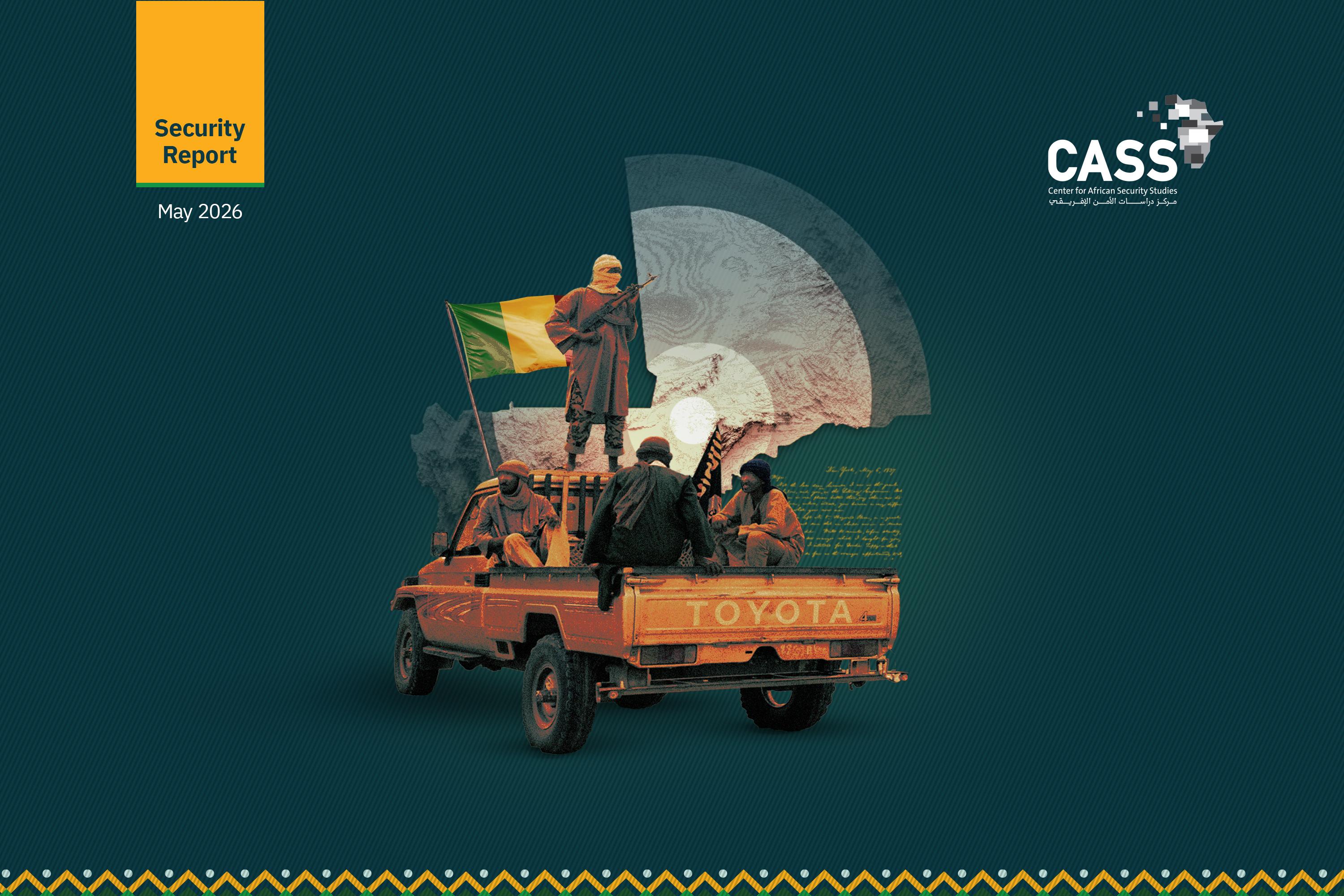
The fall of the Kissingou camp in Hombori (in central Mali, within the cercle of Douentza in the Mopti region), on the evening of 30 April, constituted a qualitative milestone in the ongoing escalation in central Mali — not only because Jama'at Nusrat al-Islam wal-Muslimin (JNIM) succeeded in seizing a heavily armed military base, but because the operation reflects the group's transition from a pattern of attrition and ambushes to a pattern of manoeuvre attacks against military nodes and principal supply lines.
The attack was carried out by two battalions comprising more than 200 fighters on motorcycles, who managed to enter the camp after the Malian force withdrew from it, before seizing heavy materiel that included approximately 20 tanks and 15 artillery pieces, and then burning the facility to the ground — a scene that encapsulates the erosion of the Malian army's ability to hold its positions outside the major urban centres.
The importance of Hombori lies in its geographical location more than in its demographic weight. The town sits on the axis linking Douentza and Mopti — that is, on the artery connecting central Mali with its southern depth and with the capital Bamako — and also constitutes a transit node between the Mopti–Gao axis and the central axis heading northward. Control over the Hombori camp therefore does not merely represent a tactical blow against an isolated garrison; it means opening a breach on one of the most important military and logistical movement axes of the Malian army in the centre, and threatening Bamako's ability to sustain its positions east and north of Mopti.
In this sense, Hombori represents a middle link between the group's pressure on Bamako from the southwest and its expansion toward the interior of the centre and north from the east.
What transpired in Hombori cannot be separated from the broader offensive that began on 25 April, when Jama'at Nusrat al-Islam wal-Muslimin, in parallel with its local allies, launched a wave of coordinated operations targeting Kati, the surroundings of Bamako, Mopti, Sévaré, Gao, and Kidal. This pattern of simultaneous strikes revealed a clear improvement in operational planning, a higher level of coordination between the group's units, and its ability to distribute pressure across more than one front simultaneously.
It also demonstrated that the group has become capable of combining the tactic of besieging the capital, applying pressure on rear bases, and pouncing on peripheral positions with lower staying power.
The recent advance is attributable to four principal causes:
First, the structural exhaustion that has afflicted the Malian army following weeks of simultaneous pressure, particularly in the wake of the killing of Defence Minister Sadou Camara during the attacks of 25–26 April, which weakened the command centre and disrupted the military decision-making system.
Second, the fragility of the army's field deployment, as its units are spread across vast distances with weak air support and slow reinforcement capacity, rendering many advanced positions vulnerable to withdrawal before engagement.
Third, JNIM's reliance on light-movement tactics through motorcycle units, which grants it a speed of flanking and surprise that the heavy regular forces find difficult to match.
Fourth, the declining deterrent effect of Russian support, as the Russian presence has come to resemble a limited support force with minimal influence over field outcomes, particularly following the recent setbacks in the north and centre.
On the ground, the fall of Hombori grants the group three direct gains:
First, a firepower gain through the seizure of heavy materiel that can be repurposed, dismantled, or denied to the army.
Second, a psychological and media gain that consolidates the image of the army as a force that withdraws and abandons its positions before engagement.
Third, an operational gain that enables the expansion of pressure on the Douentza–Mopti axis, and potentially the threatening of Sévaré, thereby raising the cost of army movement between the centre and the capital.
In contrast, this development places the military council before a difficult dilemma: either withdrawing additional forces to secure Bamako and its surroundings — which means leaving the peripheries more exposed — or maintaining the current deployment while risking the repetition of the Hombori scenario at other positions.
In the short term, the group is expected to continue its strategy of "expanding the stranglehold" by striking the axes linking Bamako with the centre, while targeting transit and supply points rather than pursuing direct urban consolidation.