
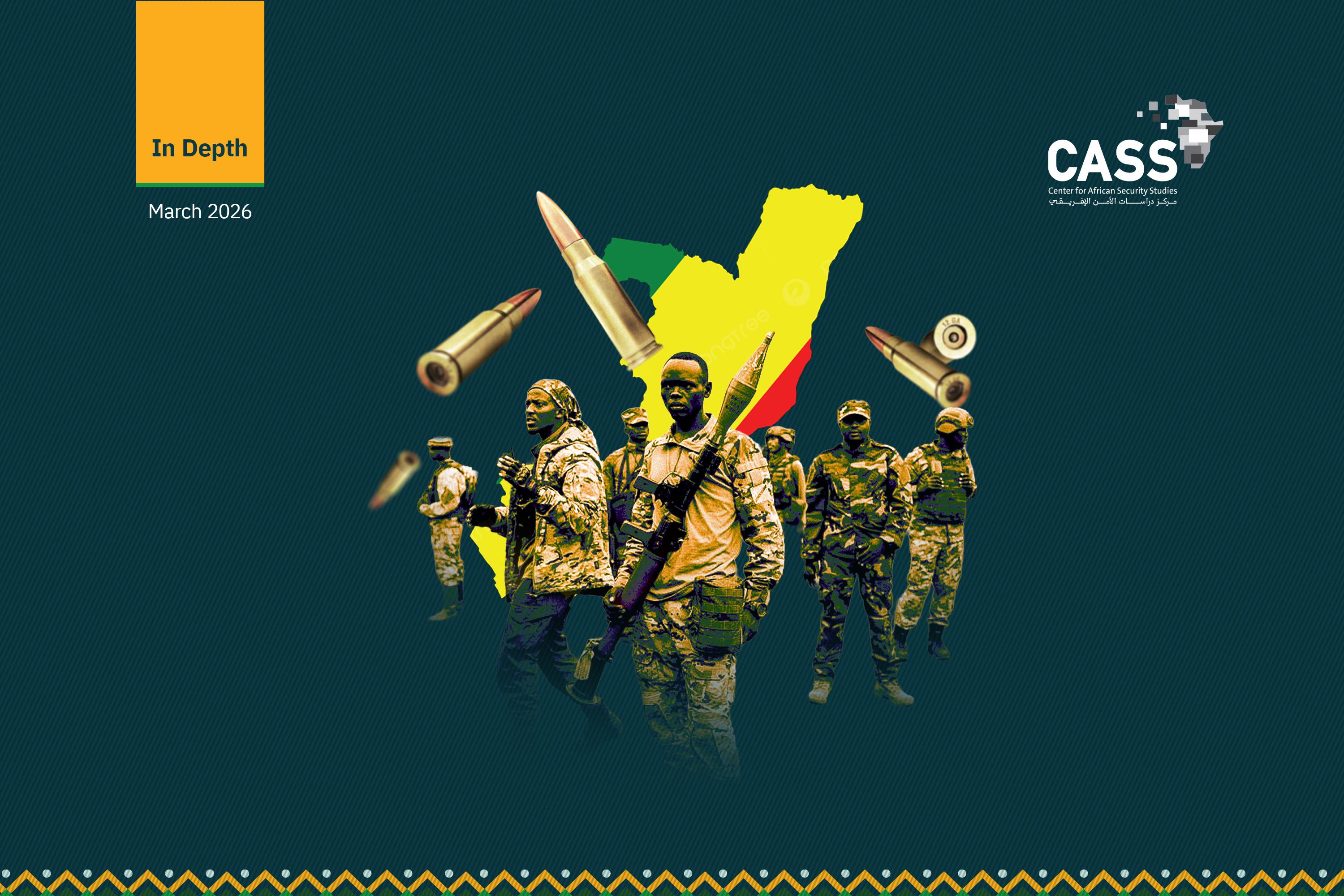
The map of control in the Democratic Republic of Congo’s North Kivu province has changed radically since early March, as the M23 rebel movement shifts from a strategy of limited operations to imposing a “comprehensive urban siege” on the provincial capital of Goma.
Fighting has been concentrated around the strategic town of Sake, the only remaining western gateway to the city. By controlling the surrounding hills and mountains, the movement has sought to place government bases and the airport within direct artillery range, thus crippling government forces’ ability to maneuver.
This has effectively cut off Goma’s main supply route, the N2 highway, from Kinshasa and from the city of Bukavu, 200 kilometers to the south.
This siege is more than a military move. It has also created a suffocating humanitarian and economic crisis in Goma, cutting off the supply of essential goods. This is clearly aimed at pressuring the public and forcing the central government in Kinshasa to make significant political concessions—including recognizing the M23 as a legitimate party to direct negotiations.
Recent battles have also revealed a significant evolution in the movement’s combat capabilities. It now makes extensive use of man-portable air defense systems (MANPADS), which have successfully neutralized the Congolese army’s air superiority and prevented its helicopters from carrying out landings or medical evacuations.
The use of advanced commercial drones has also emerged as a crucial intelligence tool, making mortar and artillery fire more accurate and giving the rebels a tactical advantage in the rugged mountain terrain.
This transformation from a forest militia into a technically advanced paramilitary force reflects the scale and sophistication of the logistical support the movement has received, and explains the rapid collapse of some of the government’s front lines.
Since the 2010s, the DRC has accused neighboring Rwanda of supporting the M23 movement. Rwanda denies this, but a diplomatic stalemate in the Luanda process—aimed at defusing tensions between them—has led to an escalation between Kinshasa and Kigali and provided the political cover for the rebel advance.
The withdrawal of United Nations peacekeepers, to be replaced by a Southern African Development Community (SADC) mission, has given the M23 movement a rapidly closing window in which to establish a new reality on the ground, one that will be difficult to reverse through military means.
The M23’s imminent capture of Sake, a key transportation hub, could leave the international community with little option but to accept a fait accompli and negotiate a new roadmap that grants the movement permanent administrative and military influence in the eastern DRC.