
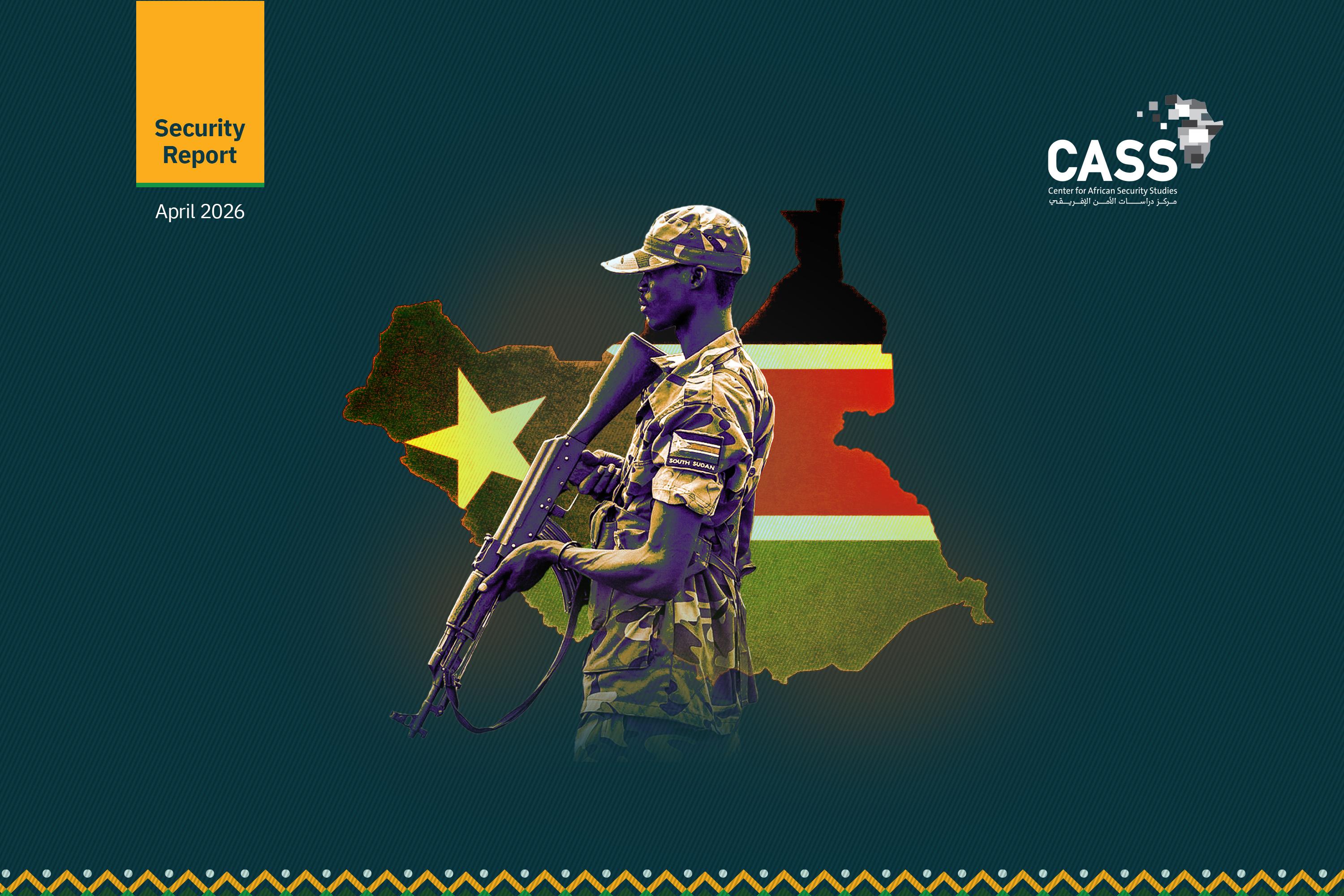
The security situation in South Sudan has been witnessing an accelerating deterioration since the beginning of April 2026, reflecting the fragility of the transitional arrangements adopted following the Revitalised Peace Agreement of 2018. The pace of clashes has intensified in a number of states, most notably Upper Nile and Unity, where confrontations broke out between government forces and elements linked to the armed opposition.
These clashes were not isolated incidents, but rather came within a recurring pattern of local violence in which the political intertwines with the tribal, feeding on the absence of effective central control.
These developments were accompanied by notable field movements, including the redeployment of military units and partial mobilisation in some areas, reinforcing fears of a gradual collapse of the fragile ceasefire.
At the same time, attacks on villages increased, leading to new internal displacement, alongside an escalation in incitement rhetoric among some local leaderships, which points to an environment liable to ignite at any moment.
This deterioration cannot be separated from the persistent stumbling in the implementation of the security arrangements that form the core of the peace agreement. The forces integration process, which was supposed to lead to the formation of a unified national army, remains largely stalled, leaving in place multiple armed formations with differing loyalties.
This duality in the military structure translates on the ground into recurring friction, even among units nominally belonging to the transitional government, which in practice continue to operate according to their former affiliations.
Added to this is the fragility of the political balance within the transitional authority, where a lack of trust among its components persists, manifesting in competition over influence, particularly in regions rich in oil resources. In this context, any local tension becomes a candidate for transformation into a broader confrontation, given the ease of mobilising fighters along tribal or political lines.
The tribal factor remains in turn a decisive element in explaining the escalation of violence, as disputes over basic resources such as water and grazing land recur, particularly under growing environmental and economic pressures.
These disputes frequently intersect with political divisions, acquiring an armed dimension that transcends their local boundaries.
Furthermore, the deepening economic crisis, including delayed payment of regular forces' salaries and rising living costs, weakens discipline within the security apparatuses and increases the likelihood of some of their elements becoming involved in acts of violence or looting.
To this is added the widespread proliferation of weapons among the population, alongside weak state institutions, making the containment of any escalation an extremely difficult matter.
The internal actors remain the most influential in shaping the course of events, whether through government forces, opposition factions, or local leaders who possess a real capacity to mobilise fighters in their areas. These leaders do not always act according to national political considerations, but rather according to narrow local calculations, which further complicates the picture.
At the regional level, neighbouring states continue to play a mediating role on occasion, but at the same time may be linked to informal support networks for certain factions, particularly in border areas, which maintains a degree of overlap between the internal conflict and regional balances.
At the international level, the United Nations mission and concerned organisations are attempting to contain the deterioration, but their influence remains limited due to field constraints and a decline in international attention to the crisis compared to other more pressing files.
In light of these factors, the prospects for the security situation in South Sudan until the end of 2026 appear to be governed by several scenarios, most notably the continuation of the pattern of "chronic instability", whereby limited and sporadic clashes persist without sliding into an all-out war — this being the most likely scenario given the balance of weakness among the parties.
Nevertheless, the risk of escalation remains present, particularly if a political breakdown occurs within the transitional authority or a major confrontation erupts between principal forces, which could push the country toward a wider conflict.
Conversely, a scenario of relative containment remains possible, but requires a more effective regional and international intervention and genuine pressure for the implementation of the security arrangements, something whose indicators do not appear strong at the present time. Accordingly, the general trajectory points to the continuation of security fragility, with the structural factors of the conflict remaining unaddressed, leaving South Sudan exposed to recurring cycles of violence and instability throughout the remainder of the year.