
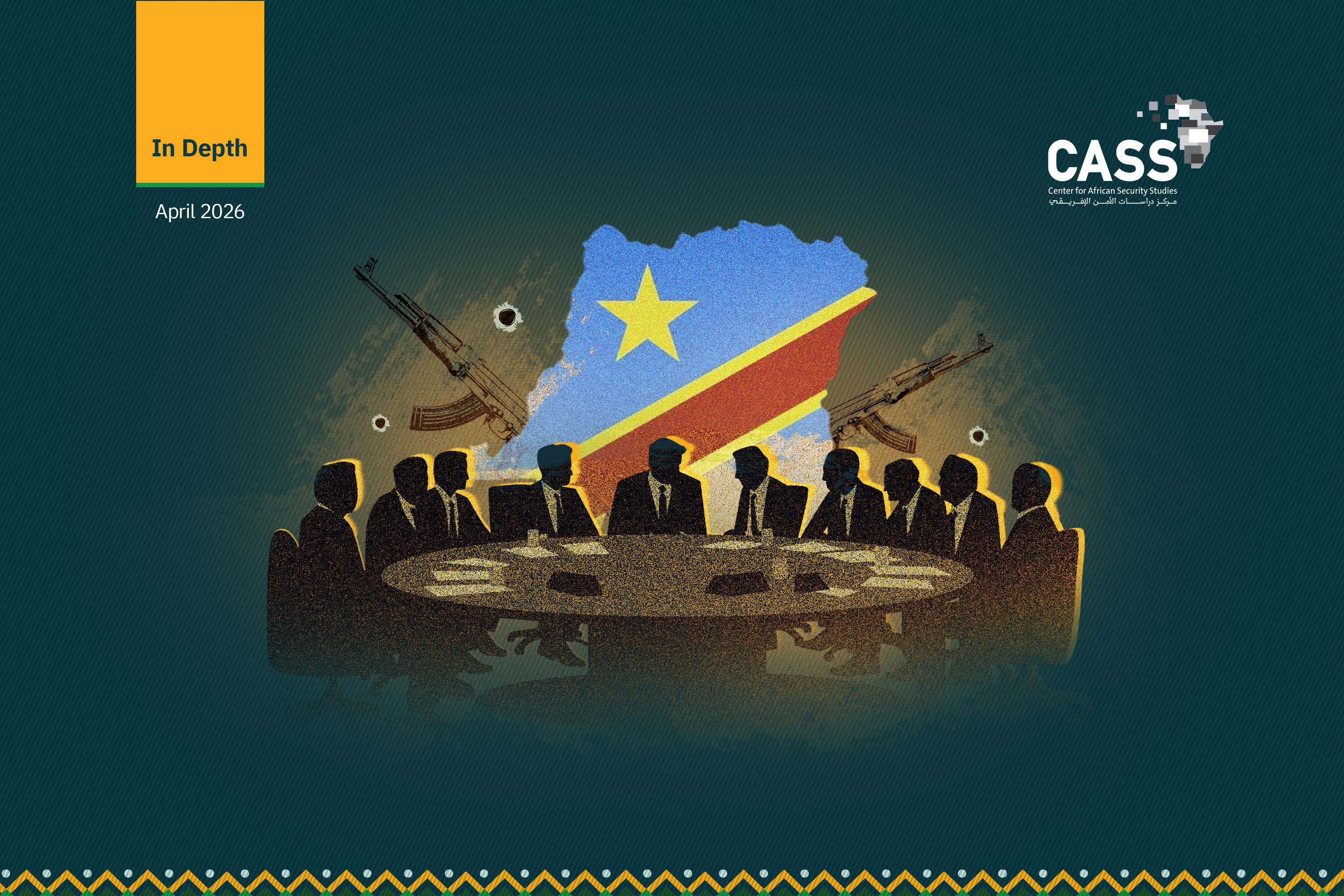
A new round of peace talks has begun in the Democratic Republic of Congo within the framework of the "Nairobi Process", in an attempt to curb the spread of violence, which has witnessed a change in its patterns and geographical distribution. Rather than clashes concentrating in or around major cities, the focal points of tension have gradually shifted toward remote highland areas in the east of the country, reflecting a tactical shift among armed groups and posing new challenges before regional mediation efforts.
The Nairobi Process is a negotiating framework launched in 2022 under the leadership of former Kenyan President Uhuru Kenyatta to address the conflict in the Democratic Republic of Congo through dialogue between the government and armed groups, with regional support from the East African Community. It aims to achieve a ceasefire, disarmament and reintegration, but has faced repeated setbacks due to the continuation of fighting and the multiplicity of armed actors.
The geographical shift in the map of violence's spread cannot be separated from the increasing military pressure on armed factions in urban and semi-urban areas, where the deployment of government forces and the reinforcement of peacekeeping mission presence have reduced these groups' margin of movement.
As a result, these factions have resorted to repositioning themselves in rugged areas of low population density, which provide them with natural defensive advantages as well as making them difficult for regular forces to reach. This pattern of "tactical withdrawal" does not signify a decline in combat capability so much as it reflects a reorganisation and redeployment that prolongs the conflict and complicates the possibility of containing it.
In this context, the new peace talks acquire heightened importance, as they come at a moment when the balance of power on the ground is being reshaped. Uhuru Kenyatta's leadership of the negotiating process reflects the continued regional bet on his experience in managing complex files in the Great Lakes region, and also indicates the desire of neighbouring countries to prevent the situation from sliding into deeper levels of instability, the repercussions of which could extend across borders.
Nevertheless, the success of this round remains contingent on the extent to which the mediators are able to incorporate field-level shifts into their negotiating approach, rather than relying on previous formulas that no longer reflect the current reality.
One of the most prominent problems facing these talks consists in the growing number of armed actors and the fragmentation of their command structures, which diminishes the prospects of reaching a comprehensive and binding agreement.
The groups that have redeployed in the highlands often enjoy a higher degree of operational autonomy, making their commitment to any centralised agreement far from guaranteed. Furthermore, these areas witness an overlap between insurgency activities and the illicit economy, including illegal mining and resource smuggling, which provides financial incentives for the continuation of violence.
On the other hand, the humanitarian dimension imposes itself forcefully on the negotiating agenda, as the transfer of fighting to remote areas exacerbates the suffering of local populations, who find themselves cut off from humanitarian aid and basic services.
This situation creates additional pressure on international and regional mediators to push the parties toward a ceasefire, even if a phased one, to facilitate humanitarian access. However, past experience points to the fragility of such understandings in the absence of effective monitoring mechanisms.
The regional environment also plays a decisive role in determining the outcomes of this round. Indirect rivalry among certain neighbouring states, whether through political or logistical support for particular factions, remains a factor obstructing any sustainable settlement.
Within this framework, Uhuru Kenyatta's ability to secure broader regional consensus may be the decisive factor between the talks' success or failure, particularly given the need for security coordination that addresses the cross-border roots of the conflict.
In sum, this round of peace talks reflects a fundamental paradox: it is launched at a time when the need for a political solution is growing, yet it faces in return a more complex and fragmented field reality.
The shift of violence to remote highlands does not only change the geography of the conflict, it reshapes its rules, which calls for a more flexible and innovative negotiating approach that takes into account the evolving nature of the threats and the actors.
Without this, the present round may join the chain of incomplete attempts that have failed to achieve lasting stability in eastern Democratic Republic of Congo.